
Apostles' Creed Prayer: Complete Catholic Guide to History, Meaning, and Recitation

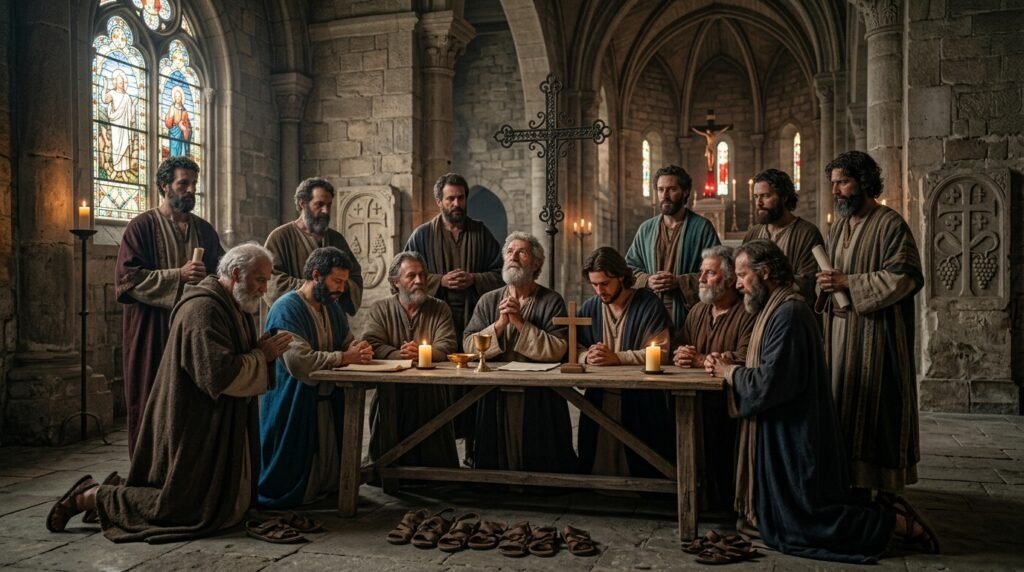
The Apostles' Creed prayer—historically known as the Symbolum Apostolorum—serves as the foundational summary of Christian orthodoxy. Recited daily across the globe by millions of Catholic, Anglican, Lutheran, and Protestant faithful, this ancient profession of faith encapsulates the core mysteries of the Holy Trinity, the Incarnation, the Paschal Mystery, and the ultimate destiny of the Church.
Whether prayed at the beginning of the Holy Rosary, proclaimed during Holy Mass, or memorized during religious instruction, understanding the history, full text, and profound theological meaning of the Apostles' Creed deepens every Christian's personal journey with God.
- Historical Origins of the Apostles' Creed
- The Complete Text of the Apostles' Creed
- Line-by-Line Breakdown: The 12 Articles of Faith
- Theological Nuances: Clarifying Difficult Phrases
- The Apostles' Creed in Latin (Symbolum Apostolorum)
- Role of the Apostles' Creed in the Holy Rosary
- Comparative Overview: Catholic vs. Protestant Usage
- Recommended video
- Frequently Asked Questions About the Apostles' Creed (FAQ)
Historical Origins of the Apostles' Creed
Where did the Apostles' Creed originate? While an ancient pious tradition held that each of the Twelve Apostles contributed one of the twelve articles of faith on the day of Pentecost, historical and theological research shows a more organic, liturgical development within the early Church.
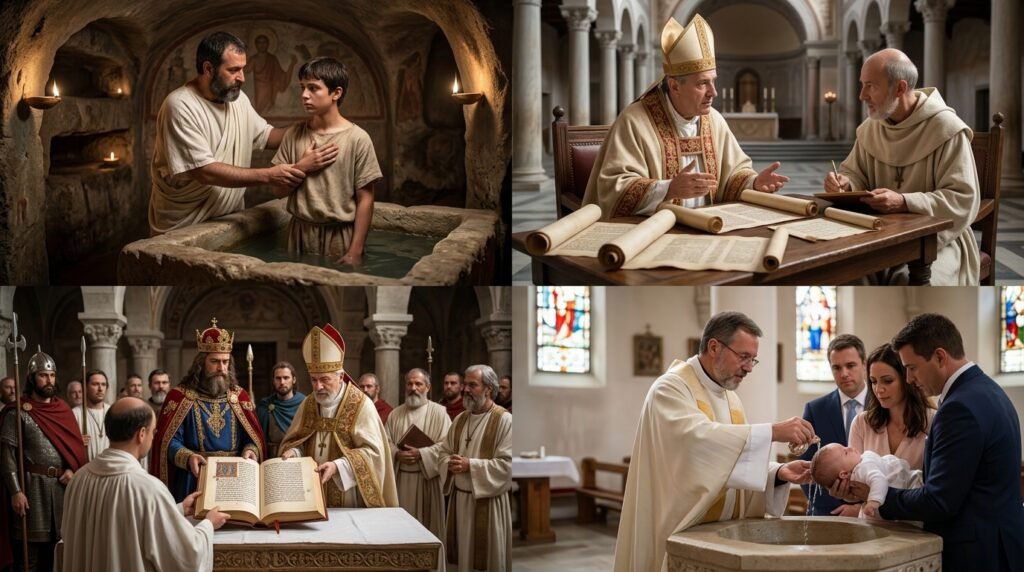
Historical Evolution of the Apostles' Creed
2nd Century (Old Roman Symbol): Emerged in Rome as a baptismal interrogation, ensuring candidates affirmed faith in Father, Son, and Holy Spirit before immersion.
4th–5th Century: Mentioned by Saint Ambrose and Saint Jerome as the traditional baptismal creed of the Roman Church.
8th Century (Received Text): The expanded, standardized version used today took definitive form in Gaul and was officially adopted across the Western Church by Emperor Charlemagne and Pope Leo III.
Patrimony: Remains the primary baptismal creed of the Western Church, while the Nicene-Constantinopolitan Creed is used for Sunday Eucharist.
The creed grew out of the baptismal mandate given by Jesus Christ in the Gospel of Saint Matthew: "Go therefore and make disciples of all nations, baptizing them in the name of the Father and of the Son and of the Holy Spirit" (Matthew 28:19).
The Complete Text of the Apostles' Creed
Below is the complete, official English text of the Apostles' Creed as used in Catholic liturgy, prayer books, and the Holy Rosary.
Traditional English Version (Catholic Received Text)
I believe in God, the Father Almighty, Creator of heaven and earth,
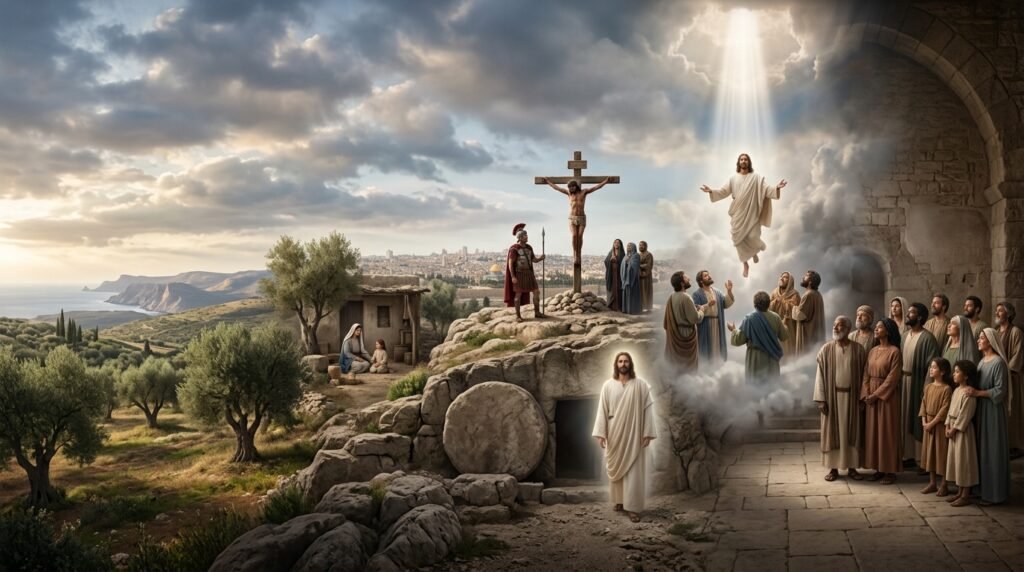
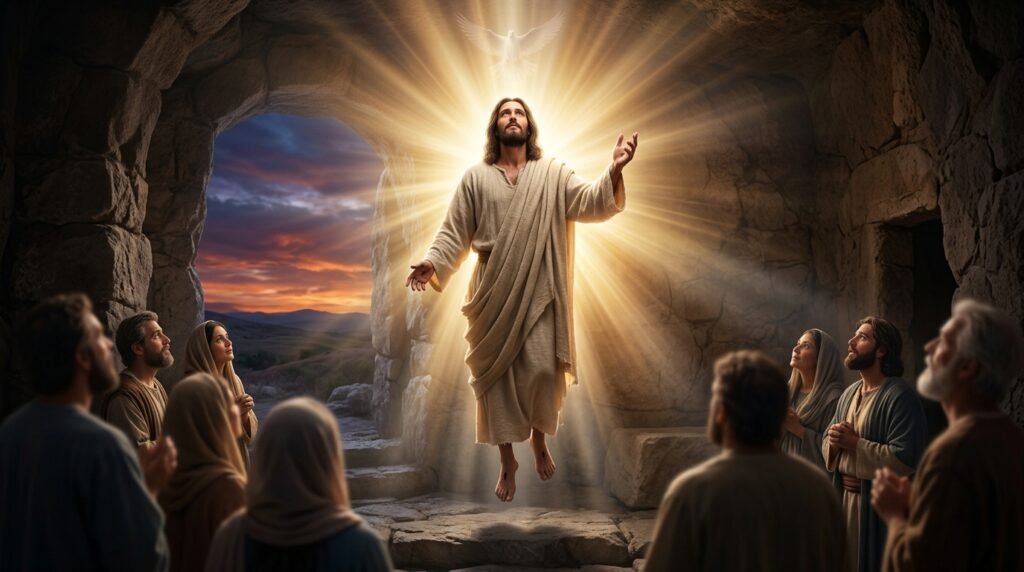
and in Jesus Christ, His only Son, our Lord, who was conceived by the Holy Spirit, born of the Virgin Mary, suffered under Pontius Pilate, was crucified, died and was buried; He descended into hell; on the third day He rose again from the dead; He ascended into heaven, and is seated at the right hand of God the Father Almighty; from there He will come to judge the living and the dead.
I believe in the Holy Spirit, the holy catholic Church, the communion of saints, the forgiveness of sins, the resurrection of the body, and life everlasting. Amen.
Line-by-Line Breakdown: The 12 Articles of Faith
The Catechism of the Catholic Church divides the Apostles' Creed into twelve distinct articles, mirroring the twelve Apostles and outlining the systematic truths of Christian revelation.
| Article | Creed Statement | Theological Focus |
|---|---|---|
| Article 1 | I believe in God, the Father Almighty, Creator of heaven and earth | Faith in God the Father as omnipotent Creator of the visible and invisible universe |
| Article 2 | And in Jesus Christ, His only Son, our Lord | Affirmation of Christ's divine Sonship and lordship over creation |
| Article 3 | Who was conceived by the Holy Spirit, born of the Virgin Mary | The mystery of the Incarnation and Mary's perpetual virginity |
| Article 4 | Suffered under Pontius Pilate, was crucified, died and was buried | Historical reality of Christ's Passion, death, and real burial |
| Article 5 | He descended into hell; on the third day He rose again from the dead | The Harrowing of Hell (Sheol) and bodily Resurrection of Jesus |
| Article 6 | He ascended into heaven, and is seated at the right hand of God the Father Almighty | Exaltation of Christ's glorified humanity into divine glory |
| Article 7 | From there He will come to judge the living and the dead | The Second Coming (Parousia) and final universal judgment |
| Article 8 | I believe in the Holy Spirit | Faith in the Third Person of the Holy Trinity |
| Article 9 | The holy catholic Church, the communion of saints | Universal Church established by Christ and unity of all faithful (militant, suffering, triumphant) |
| Article 10 | The forgiveness of sins | Sacramental remission of sins through Baptism and Reconciliation |
| Article 11 | The resurrection of the body | Hope in the physical resurrection of all human bodies at the end of time |
| Article 12 | And life everlasting. Amen. | Eternal life in Beatific Vision with God in Heaven |
Theological Nuances: Clarifying Difficult Phrases
Certain phrases within the text of the Apostles' Creed frequently prompt questions from modern readers. Understanding these terms requires looking at their historical and theological origins.
1. "He Descended into Hell" (Descendit ad Inferos)
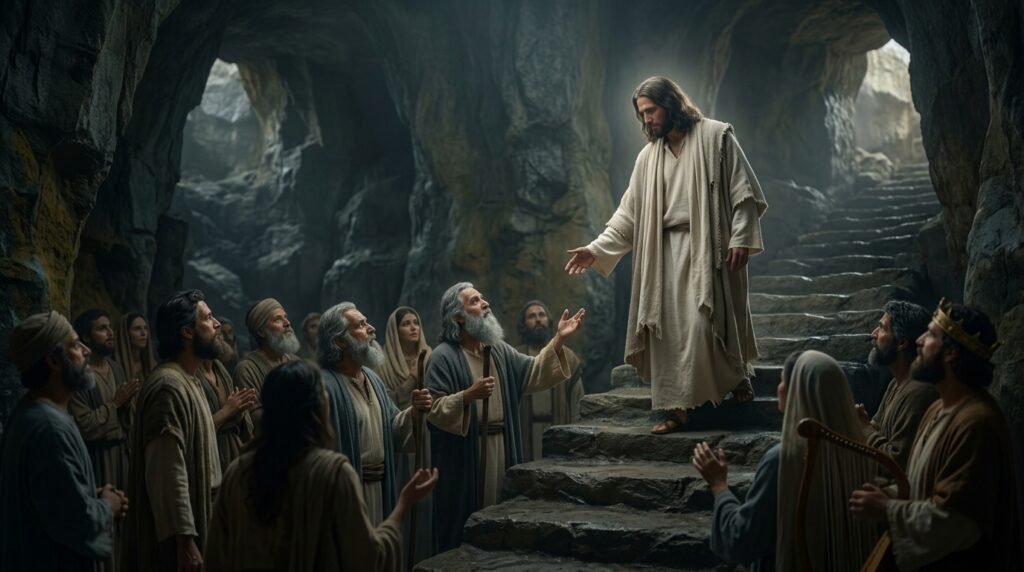
In ancient Hebrew thought, Sheol (translated as Inferos or Hell) referred to the realm of the dead—the abode of departed souls awaiting redemption. This clause does not mean Jesus entered the realm of the damned (Gehenna) to suffer punishment. Rather, it means Christ truly died as a human being and descended to the limbus of the patriarchs to announce salvation to the righteous souls (such as Abraham, Moses, and David) who preceded Him, liberating them and opening the gates of Heaven.
2. "The Holy Catholic Church"
When recited in Protestant, Lutheran, Anglican, or Episcopal communities, the word catholic is intentionally spelled with a lowercase c. Derived from the Greek word katholikos, it literally translates to "universal" or "whole." While Roman Catholics affirm this line as referring to the Catholic Church under the successor of Peter, broader Western traditions recite it as an affirmation of belief in the universal body of Christian believers throughout all ages.
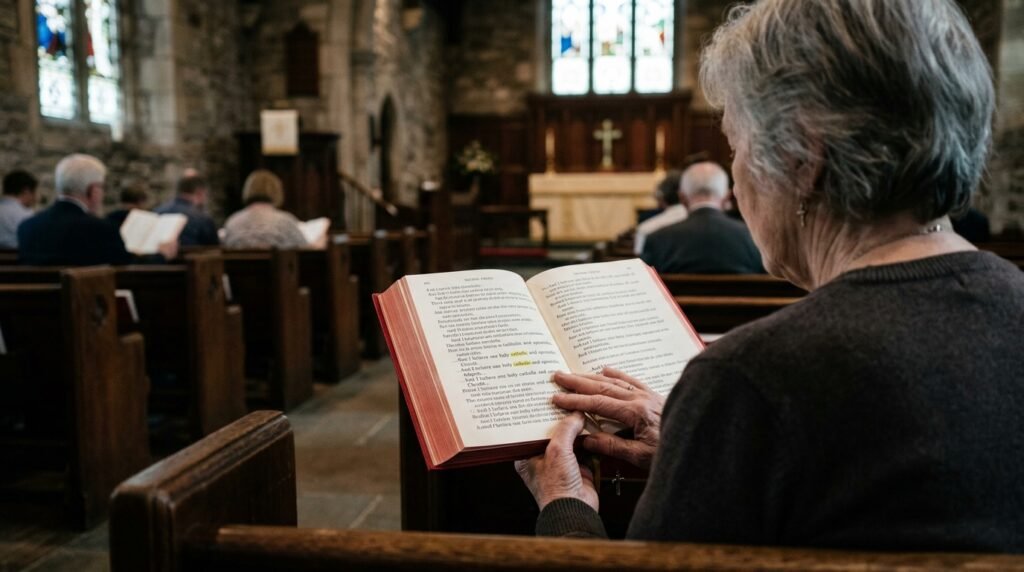
The Apostles' Creed in Latin (Symbolum Apostolorum)
Praying the Apostles' Creed in Latin connects the believer directly with the liturgical heritage of the Western Church.
Textus Latinus (Latin Text)
Credo in Deum Patrem omnipotentes, Creatorem caeli et terrae.
Et in Iesum Christum, Filium Eius unicum, Dominum nostrum, qui conceptus est de Spiritu Sancto, natus ex Maria Virgine, passus sub Pontio Pilato, crucifixus, mortuus, et sepultus, descendit ad inferos, tertia die resurrexit a mortuis, ascendit ad caelos, sedet ad dexteram Dei Patris omnipotentis, inde venturus est iudicare vivos et mortuos.
Credo in Spiritum Sanctum, sanctam Ecclesiam catholicam, sanctorum communionem, remissionem peccatorum, carnis resurrectionem, vitam aeternam. Amen.
Role of the Apostles' Creed in the Holy Rosary
The Apostles' Creed serves a critical structural purpose in Catholic Marian devotion, functioning as the foundational prayer recited at the very beginning of the Holy Rosary.
Why the Rosary Begins with the Apostles' Creed
1. Anchor of Faith: Before meditating on the mysteries of Christ's life through the eyes of Mary, the penitent grounds their mind in the objective truths of Christian revelation.
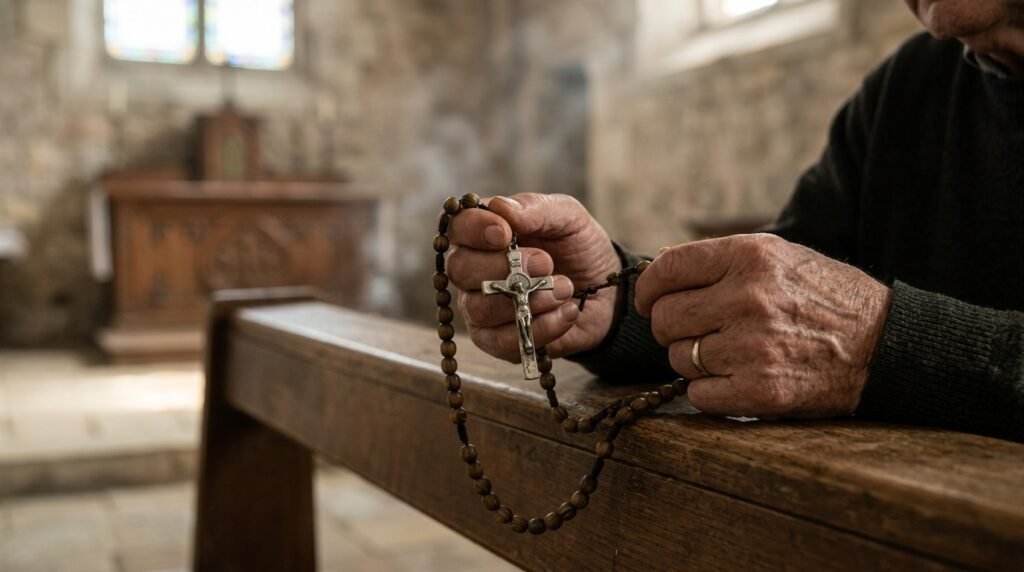
2. Physical Placement: Recited while holding the Crucifix at the start of the Rosary chain, uniting the statement of belief directly to the wood of the Cross.
3. Trinitarian Foundation: Establishes the entire Rosary as a Trinitarian prayer offered to the Father, through the Son, in the Holy Spirit.
Comparative Overview: Catholic vs. Protestant Usage
While the Apostles' Creed is a shared treasure across Western Christianity, slight textual or interpretive differences exist across traditions.
| Tradition | Textual / Liturgical Distinctives | Primary Liturgical Usage |
|---|---|---|
| Roman Catholic | Uses "descended into hell"; "catholic" understood as Roman Catholic Church; recited at Rosary and baptismal renewals | Holy Rosary, Sacraments of Initiation, option for Sunday Mass in Lent/Easter |
| Lutheran | Uses "descended into hell"; often translates "catholic" as "christian" or "universal" in modern hymnals | Weekly Divine Service, Luther's Small Catechism instruction |
| Anglican / Episcopal | Found in Book of Common Prayer; retains "descended into hell" or "descended to the dead" | Daily Office (Morning and Evening Prayer), Baptismal Covenant |
| Methodist | Ecumenical version often omits or footnotes "descended into hell"; uses lowercase "holy catholic church" | Sunday worship service, baptismal vows |
Recommended video
Frequently Asked Questions About the Apostles' Creed (FAQ)
Below, we answer common questions regarding the Apostles' Creed prayer, its origins, and its theological meaning across Christian traditions.
1. Is the Apostles' Creed found directly in the Bible?
The exact text of the Apostles' Creed is not found word-for-word in a single biblical chapter. However, every single article of faith in the creed is directly rooted in Sacred Scripture, drawing from passages in Matthew, John, Acts, Romans, and the Epistles of Saint Paul.
2. What is the difference between the Apostles' Creed and the Nicene Creed?
The Apostles' Creed is an earlier, shorter baptismal creed of the Western Church. The Nicene Creed was promulgated by the Ecumenical Councils of Nicaea (325 AD) and Constantinople (381 AD) to combat heresies regarding the divinity of Jesus Christ and the Holy Spirit, making it longer and more detailed in its theological definitions.
3. Why do Protestants say "holy catholic church" when reciting the creed?
In the context of the catholic apostles creed text, the word catholic comes from the Greek katholikos, meaning "universal." When Protestants recite the creed, they are affirming belief in the universal Church of all true believers in Jesus Christ across time and space, rather than specifically referencing the Roman Catholic institution.
4. What does "communion of saints" mean in the Apostles' Creed?
The communion of saints refers to the spiritual union that binds together all members of the Church: the faithful living on earth (Church Militant), the purified souls in Purgatory (Church Suffering), and the glorified saints in Heaven (Church Triumphant), all united in Christ.
5. How is the Apostles' Creed used during Catholic Baptism?
During the Rite of Baptism, the priest or deacon asks the candidate or godparents three questions based directly on the three parts of the apostles creed catholic text: "Do you believe in God, the Father Almighty...", "Do you believe in Jesus Christ...", and "Do you believe in the Holy Spirit...". To each question, the candidate responds: "I do."
6. Why is the Apostles' Creed recited at the beginning of the Rosary?
Reciting the apostles creed rosary prayer while holding the crucifix anchors the entire devotion in the essential truths of Christian revelation. It ensures that all subsequent Marian prayers and meditations remain centered on the mysteries of the Holy Trinity and Jesus Christ.
Si quieres conocer otros artículos parecidos a Apostles' Creed Prayer: Complete Catholic Guide to History, Meaning, and Recitation puedes visitar la categoría Prayers.