
The Chaplet of Divine Mercy: The Complete Guide, Full chaplet, PDF, novena & 3 o'clock prayer
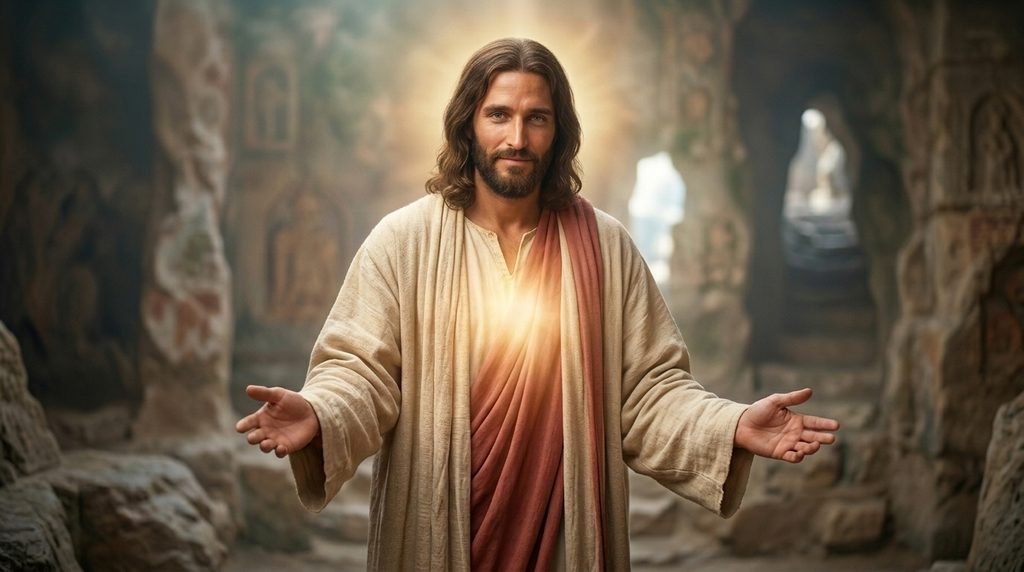
On the evening of September 13, 1935, a young Polish nun named Faustina Kowalska experienced a vision that would give rise to one of the most widely prayed devotions in the modern Catholic Church. She saw an angel sent to punish the earth, and as she pleaded for mercy on the world's behalf, she found herself, in her own words, standing before the Holy Trinity. The words she prayed in that moment became, the very next day, a formal chaplet that Christ Himself dictated to her, prayer by prayer, on the beads of an ordinary rosary.
This guide brings together everything you need for a complete and historically accurate devotion: the true origin of the chaplet as recorded in Saint Faustina's own Diary, the complete prayer written out exactly as it has come down to us, the nine-day novena Christ dictated to her before the Feast of Mercy, the short prayer traditionally offered at three o'clock, guidance for praying the chaplet for the sick and dying, and the chaplet in both Spanish and Latin. Every prayer below is reproduced faithfully against its original source.
In Short
The Chaplet of Divine Mercy was revealed to Saint Faustina Kowalska in 1935 and is prayed on ordinary Rosary beads, offering the Body and Blood, Soul and Divinity of Christ to the Father in atonement for sin. It is traditionally prayed daily, at three o'clock in the afternoon, and as a nine-day novena before Divine Mercy Sunday.
The History of the Chaplet of Divine Mercy
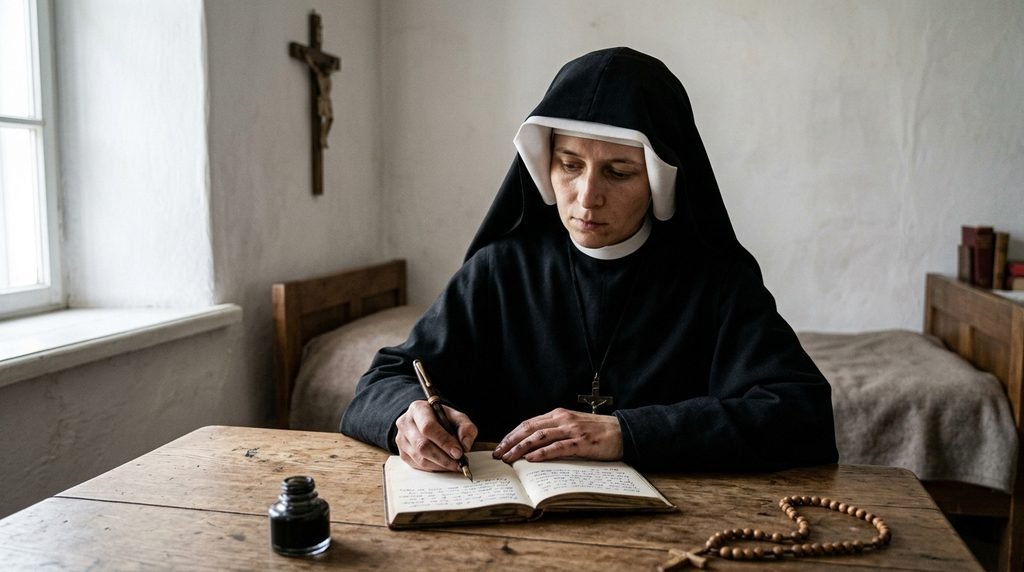
Saint Faustina Kowalska, a Polish member of the Congregation of the Sisters of Our Lady of Mercy, recorded the origin of this prayer in careful detail in her spiritual Diary. On the evening of September 13, 1935, she experienced a vision of an angel sent to chastise the earth for its sins. Faustina began pleading for mercy, but found her own prayer powerless against what she perceived as the weight of divine justice. In that moment, she wrote, she found herself before the Most Holy Trinity, and interior words rose within her, words that would become the heart of the chaplet: an offering of Christ's own Body and Blood, Soul and Divinity, to the Father in atonement for sin.
The following morning, Christ instructed her further, giving her the exact formula to be prayed on ordinary rosary beads: an opening Our Father, Hail Mary, and Apostles' Creed, followed by the offering prayer on each large bead and a shorter petition on each small bead, closing with a threefold acclamation of God's holiness. Over the following years, Christ returned to this devotion repeatedly in Faustina's Diary, attaching to it extraordinary promises, especially concerning the hour of death, and specifically instructing that it be prayed for nine days before what would become known as the Feast of Mercy, now celebrated throughout the universal Church as Divine Mercy Sunday.
| Detail | Fact |
|---|---|
| Revealed To | Saint Faustina Kowalska, Vilnius, September 13-14, 1935 |
| Recorded In | Diary of Saint Faustina, entries 474-476 |
| Beads Used | An ordinary five-decade Rosary |
| Church Recognition | Universalized through Divine Mercy Sunday, instituted by Pope John Paul II in 2000 |
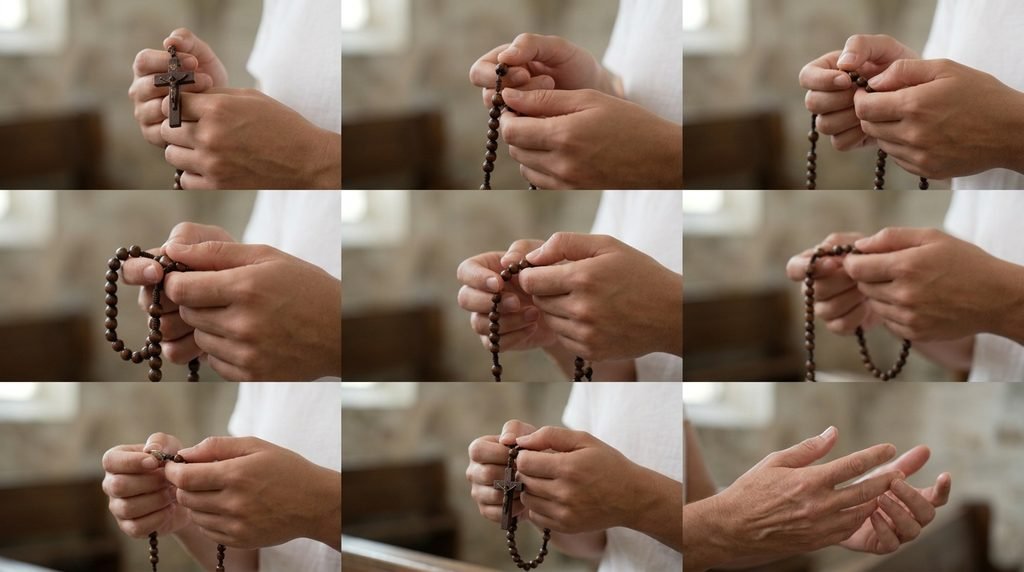
How to Pray the Chaplet of Divine Mercy, Step by Step
| Step | What to Pray |
|---|---|
| 1. Make the Sign of the Cross | Holding the crucifix at the end of the Rosary |
| 2. On the first large bead | One Our Father |
| 3. On the following small beads | One Hail Mary, then the Apostles' Creed |
| 4. On each large "Our Father" bead of the loop | The Eternal Father offering prayer, once per decade |
| 5. On each of the ten small "Hail Mary" beads | "For the sake of His sorrowful Passion...", once per bead |
| 6. Repeat steps 4 and 5 | Through all five decades of the Rosary |
| 7. To close | "Holy God, Holy Mighty One, Holy Immortal One...", repeated three times |
| 8. End | Sign of the Cross |
No rosary at hand? The chaplet does not require any special beads. It can be prayed just as validly by counting on your fingers, or simply by praying it slowly from memory once you know the words, since the physical beads are only a tool to keep count rather than something essential to the prayer itself.
Many Catholic parishes and prayer groups also pray the chaplet in song, using musical settings that keep the exact wording above while adding a simple melody, particularly for the "Eternal Father" offering and the closing "Holy God" acclamation. These sung versions are widely available through Catholic radio, parish adoration playlists, and streaming platforms, and are especially common during Divine Mercy Sunday celebrations and all-night vigils leading up to the feast.
The Complete Chaplet of Divine Mercy Prayer
Opening
Sign of the Cross. Then pray one Our Father, one Hail Mary, and the Apostles' Creed, using the full texts given further below.
Optional Opening Meditation
You expired, Jesus, but the source of life gushed forth for souls, and the ocean of mercy opened up for the whole world. O Fount of Life, unfathomable Divine Mercy, envelop the whole world and empty Yourself out upon us. O Blood and Water, which gushed forth from the Heart of Jesus as a fount of mercy for us, I trust in You.
On the Our Father Bead of Each Decade
Eternal Father, I offer You the Body and Blood, Soul and Divinity of Your dearly beloved Son, our Lord Jesus Christ, in atonement for our sins and those of the whole world.
On Each of the Ten Small Beads (repeated ten times per decade)
For the sake of His sorrowful Passion, have mercy on us and on the whole world.
Repeat for All Five Decades
Continue this pattern, one Eternal Father offering on each large bead followed by ten "For the sake of His sorrowful Passion" on the small beads, through all five decades of the Rosary.
Closing Acclamation (repeated three times)
Holy God, Holy Mighty One, Holy Immortal One, have mercy on us and on the whole world.
Concluding Prayer
Eternal God, in whom mercy is endless and the treasury of compassion inexhaustible, look kindly upon us and increase Your mercy in us, that in difficult moments we might not despair nor become despondent, but with great confidence submit ourselves to Your holy will, which is Love and Mercy itself. Amen.
End
Sign of the Cross.
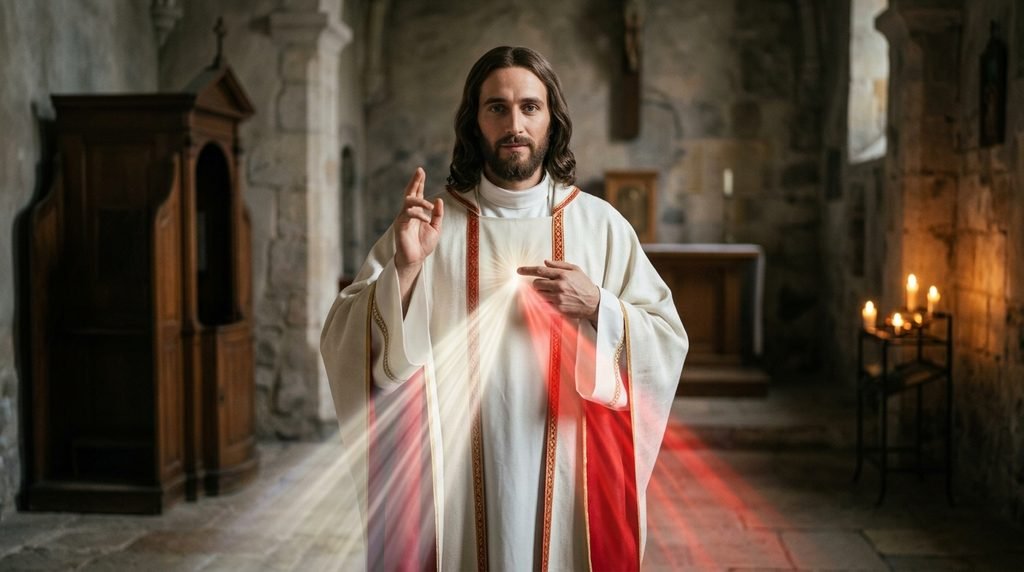
Prayers You Will Need
Apostles' Creed
I believe in God, the Father Almighty, Creator of heaven and earth, and in Jesus Christ, His only Son, our Lord, who was conceived by the Holy Spirit, born of the Virgin Mary, suffered under Pontius Pilate, was crucified, died, and was buried. He descended into hell; on the third day He rose again from the dead. He ascended into heaven, and is seated at the right hand of God the Father Almighty; from there He will come to judge the living and the dead. I believe in the Holy Spirit, the holy Catholic Church, the communion of saints, the forgiveness of sins, the resurrection of the body, and the life everlasting. Amen.
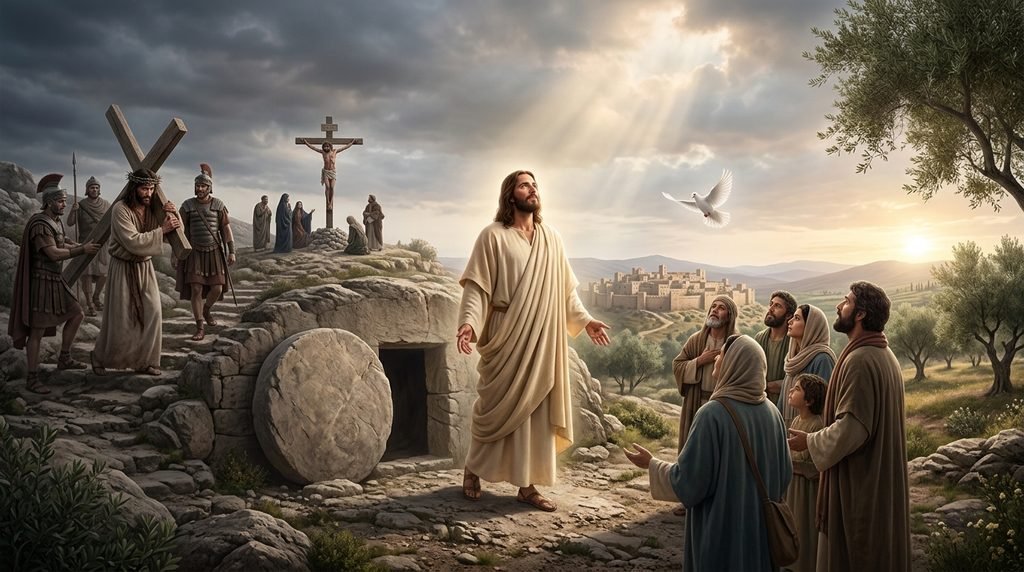
The 3 O'Clock Prayer: The Hour of Great Mercy
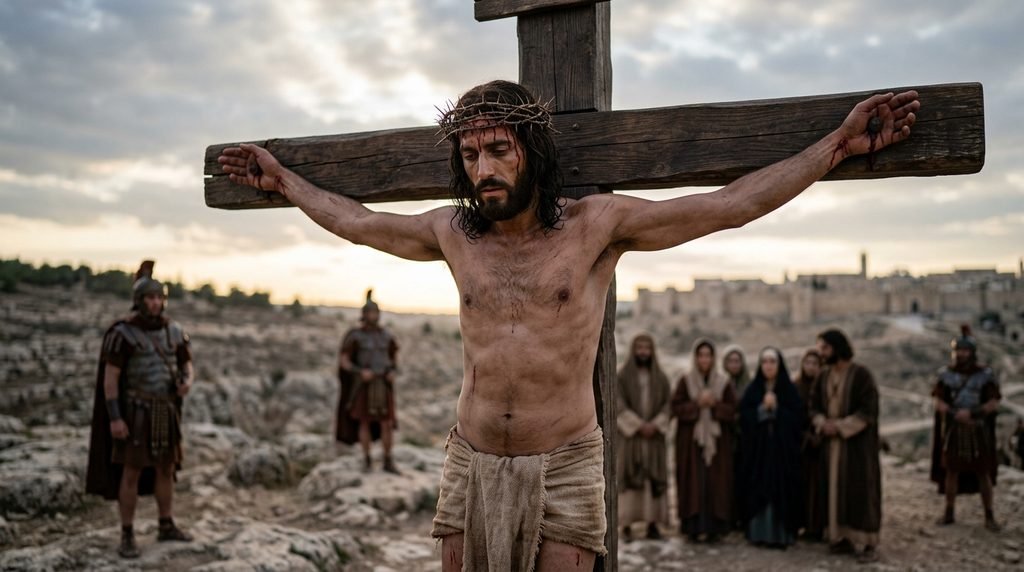
Christ specifically asked Saint Faustina to honor the hour of His death, three o'clock in the afternoon, as the Hour of Great Mercy, a moment when, He told her, mercy is open to every soul. Many Catholics pause at this hour each day, whether to pray the full chaplet or this shorter prayer alone.
The words of Christ to Saint Faustina, Diary 1320.
At three o'clock, implore My mercy, especially for sinners; and, if only for a brief moment, immerse yourself in My Passion, particularly in My abandonment at the moment of agony. This is the hour of great mercy for the whole world. I will allow you to enter into My mortal sorrow. In this hour, I will refuse nothing to the soul that makes a request of Me in virtue of My Passion.
The words of Christ to Saint Faustina, Diary 1572.
Try your best to make the Stations of the Cross in this hour, provided that your duties permit it; and if you are not able to make the Stations of the Cross, then at least step into the chapel for a moment and adore, in the Blessed Sacrament, My Heart, which is full of mercy; and should you be unable to step into the chapel, immerse yourself in prayer there where you happen to be, if only for a very brief instant.
Following this instruction, three o'clock devotion can take whichever of these forms actually fits the day: praying the full chaplet, making the Stations of the Cross, visiting the Blessed Sacrament, or, if none of that is possible, simply pausing wherever you are for even a moment of prayer. This short prayer is the one most commonly used for that brief pause.
You expired, Jesus, but the source of life gushed forth for souls, and the ocean of mercy opened up for the whole world. O Fount of Life, unfathomable Divine Mercy, envelop the whole world and empty Yourself out upon us. O Blood and Water, which gushed forth from the Heart of Jesus as a fount of mercy for us, I trust in You.
The Divine Mercy Novena: The Complete Nine Days
Christ dictated this novena to Saint Faustina personally, instructing her to bring a different group of souls to His mercy each day, traditionally prayed from Good Friday through the Saturday before Divine Mercy Sunday, though it can be prayed at any time. Each day, pray that day's intention below, then pray the complete chaplet given earlier in this guide.
Keep the chaplet and this nine-day novena close at hand as a printable guide.
Download the Free PDF Guide| Day | Group of Souls (Diary 1209-1229) |
|---|---|
| Day 1 | All mankind, especially sinners |
| Day 2 | The souls of priests and religious |
| Day 3 | All devout and faithful souls |
| Day 4 | Those who do not believe in God and those who do not yet know Jesus |
| Day 5 | The souls who have separated themselves from the Church |
| Day 6 | The meek and humble souls and the souls of little children |
| Day 7 | The souls who especially venerate and glorify His mercy |
| Day 8 | The souls detained in Purgatory |
| Day 9 | Souls who have become lukewarm |
Christ's own words to Saint Faustina about this novena remain its clearest explanation: "I desire that during these nine days you bring souls to the fountain of My mercy, that they may draw therefrom strength and refreshment and whatever grace they need in the hardships of life, and especially at the hour of death."
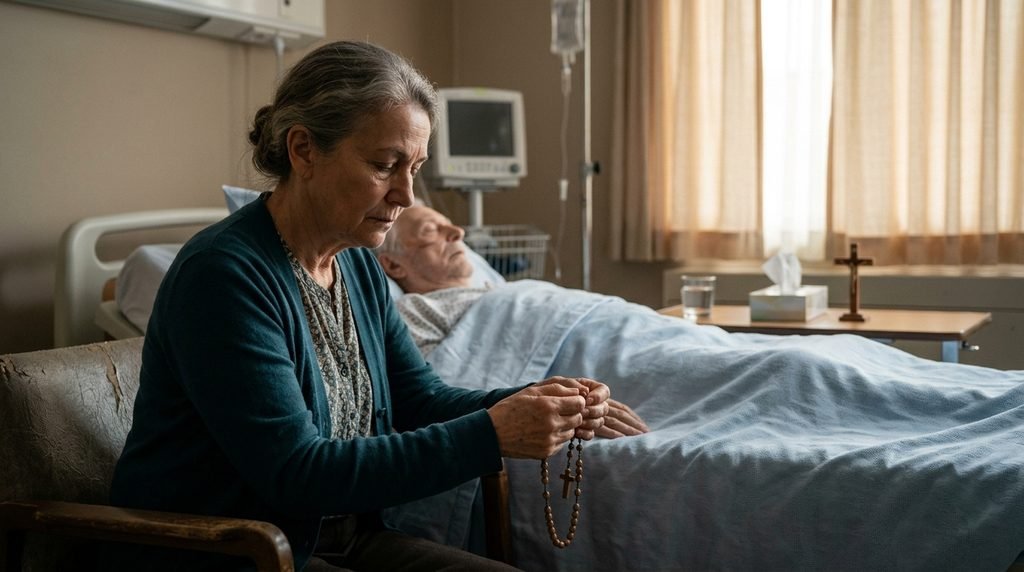
Praying the Chaplet for the Sick and Dying
According to Saint Faustina's Diary, Christ placed particular emphasis on praying the chaplet beside the dying, promising to stand between the Father and a soul in its final agony not as Judge, but as Merciful Savior, for anyone who has this chaplet recited near them at the hour of death. Many hospital chaplains, hospice volunteers, and family members now pray it specifically at a loved one's bedside for exactly this reason.
Eternal Father, look with mercy upon [Name] in this hour of need. I offer You the Body and Blood, Soul and Divinity of Your dearly beloved Son, our Lord Jesus Christ, in atonement for their sins and for the sins of the whole world. For the sake of His sorrowful Passion, receive this soul with the tenderness of a Merciful Savior rather than the severity of a Just Judge. Amen.
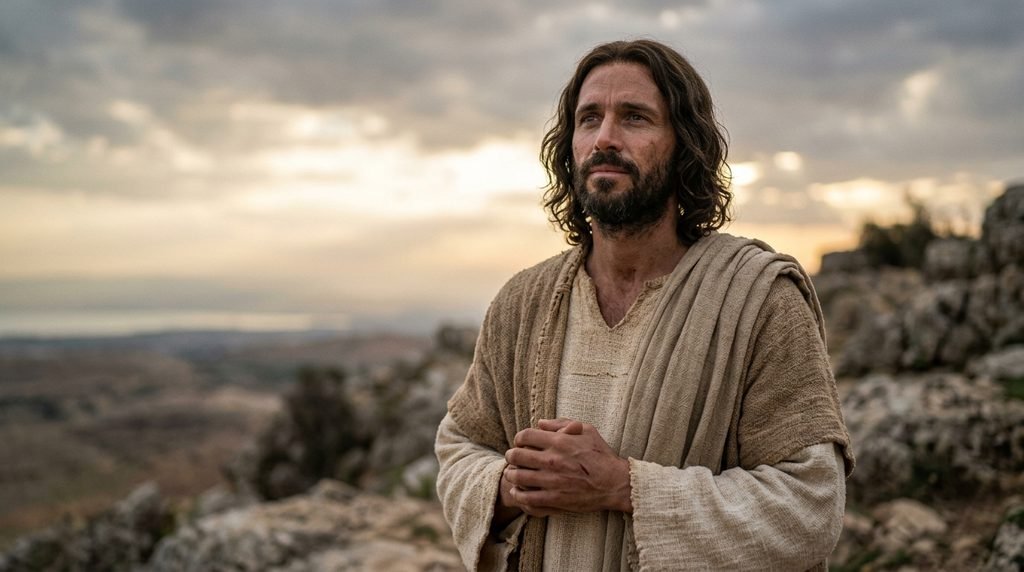
The Chaplet in Spanish (Coronilla de la Divina Misericordia)
Apertura
Señal de la Cruz. Después se reza un Padre Nuestro, un Avemaría y el Credo de los Apóstoles.
Meditación Inicial (opcional)
Tú, oh Cristo, expiraste, pero manó la fuente de vida para las almas, y se abrió un mar de misericordia para el mundo entero. Oh Fuente de Vida, insondable Misericordia Divina, envuelve al mundo entero y derrámate sobre nosotros. Oh Sangre y Agua que brotaste del Corazón de Jesús como fuente de misericordia para nosotros, en Ti confío.
En cada cuenta grande (una por decena)
Padre Eterno, te ofrezco el Cuerpo y la Sangre, el Alma y la Divinidad de tu amadísimo Hijo, Nuestro Señor Jesucristo, en propiciación por nuestros pecados y los del mundo entero.
En cada cuenta pequeña (diez veces por decena)
Por su dolorosa Pasión, ten misericordia de nosotros y del mundo entero.
Aclamación final (tres veces)
Dios Santo, Santo Fuerte, Santo Inmortal, ten piedad de nosotros y del mundo entero.
Oración de cierre
Dios Eterno, en quien la misericordia es infinita y el tesoro de la compasión inagotable, dirige hacia nosotros una mirada benigna y aumenta tu misericordia en nosotros, para que en los momentos difíciles no desesperemos ni nos desanimemos, sino que con gran confianza nos sometamos a tu santa voluntad, que es el Amor y la Misericordia misma. Amén.
Cierre
Señal de la Cruz.
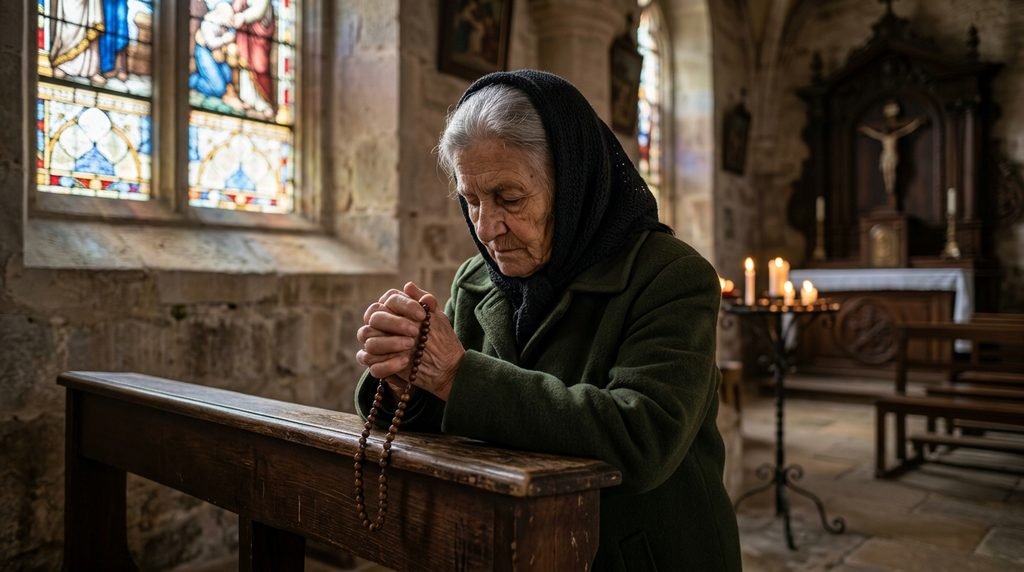
The Chaplet of Divine Mercy in Latin
Because the chaplet was revealed to Saint Faustina in Polish in 1935, no single Latin translation has ever been formally approved by the Holy See, unlike centuries-old prayers such as the Our Father or the Hail Mary. That said, the Latin version below, titled Corona Divinae Misericordiae, is the form most widely and consistently used by Catholics who pray in Latin, appearing with only minor variation across multiple independent sources.
Apertura
In nomine Patris, et Filii, et Spiritus Sancti. Amen.
Pater Noster
Pater noster, qui es in caelis, sanctificetur nomen tuum. Adveniat regnum tuum. Fiat voluntas tua, sicut in caelo et in terra. Panem nostrum quotidianum da nobis hodie, et dimitte nobis debita nostra sicut et nos dimittimus debitoribus nostris. Et ne nos inducas in tentationem, sed libera nos a malo. Amen.
Ave Maria
Ave Maria, gratia plena, Dominus tecum. Benedicta tu in mulieribus, et benedictus fructus ventris tui, Iesus. Sancta Maria, Mater Dei, ora pro nobis peccatoribus, nunc, et in hora mortis nostrae. Amen.
Credo
Credo in Deum Patrem omnipotentem, Creatorem caeli et terrae. Et in Iesum Christum, Filium eius unicum, Dominum nostrum, qui conceptus est de Spiritu Sancto, natus ex Maria Virgine, passus sub Pontio Pilato, crucifixus, mortuus, et sepultus, descendit ad inferos, tertia die resurrexit a mortuis, ascendit ad caelos, sedet ad dexteram Dei Patris omnipotentis, inde venturus est iudicare vivos et mortuos. Credo in Spiritum Sanctum, sanctam Ecclesiam catholicam, sanctorum communionem, remissionem peccatorum, carnis resurrectionem, vitam aeternam. Amen.
On the Our Father Bead of Each Decade
Pater aeterne, offero tibi Corpus et Sanguinem, animam et divinitatem dilectissimi Filii Tui, Domini nostri, Iesu Christi, in propitiatione pro peccatis nostris et totius mundi.
On Each of the Ten Small Beads
Pro dolorosa eius passione, miserere nobis et totius mundi.
Closing (repeated three times)
Sanctus Deus, Sanctus Fortis, Sanctus Immortalis, miserere nobis et totius mundi.
A widely used Latin translation, not an officially approved liturgical text.
Oratio Finalis
Deus aeterne, in Quo Misericordia immensa est altitudinis, et aerarium compassionis exhauriri non potest, respice nos benigne, et cresce in nobis Misericordiam Tuam, ne momentis difficilibus desperemus nec maesti fiamus, sed confidentia magna nos submittamus Voluntati Sanctae Tuae, quae est Caritas Misericordiaque Ipsa. Amen.
In nomine Patris, et Filii, et Spiritus Sancti. Amen.
Recommended video
Frequently Asked Questions About the Chaplet of Divine Mercy (FAQ)
Below, we answer common questions about this devotion, its history, and how to pray it correctly.
1. Who received the Chaplet of Divine Mercy?
The Chaplet of Divine Mercy was revealed to Saint Faustina Kowalska, a Polish nun, in a vision on September 13, 1935, with Christ dictating the exact wording of the prayer to her the following day, as she recorded in her spiritual Diary.
2. What beads are used to pray the chaplet?
The chaplet is prayed on an ordinary five-decade Rosary, the same beads used for the Hail Mary devotion, though the prayers themselves are entirely different, focused on Christ's mercy rather than the Hail Mary.
3. Why is the chaplet prayed at three o'clock?
Christ asked Saint Faustina to honor three o'clock in the afternoon as the Hour of Great Mercy, the hour of His death on the cross, telling her that mercy is especially open to souls at this time each day.
4. What is the Divine Mercy Novena?
The Divine Mercy Novena is nine days of prayer that Christ dictated to Saint Faustina, each day dedicated to a different group of souls, traditionally prayed from Good Friday through the Saturday before Divine Mercy Sunday.
5. When is Divine Mercy Sunday?
Divine Mercy Sunday falls on the Second Sunday of Easter, the Sunday following Easter itself, and was formally instituted as a feast of the universal Church by Pope John Paul II in the year 2000.
6. Why is the chaplet especially recommended for the dying?
According to Saint Faustina's Diary, Christ promised to stand between the Father and a soul in its final agony as a Merciful Savior rather than a Just Judge whenever this chaplet is recited near someone at the hour of death, making it a particularly cherished prayer at bedsides.
7. Are the promises attached to the chaplet official Church teaching?
The promises recorded in Saint Faustina's Diary belong to private revelation, which the Church distinguishes from the public Revelation completed in Christ. The Church has approved her Diary and canonized her, without requiring the faithful to treat every individual promise as a guaranteed outcome.
8. Can the chaplet be prayed for someone else, not just for myself?
Yes. Saint Faustina herself frequently prayed the chaplet on behalf of specific dying sinners at Christ's own request, recorded repeatedly in her Diary, making intercessory use of this prayer a central and well-documented part of the devotion.
9. How long does the chaplet take to pray?
Praying the chaplet at a reflective pace typically takes about seven to ten minutes, considerably shorter than a full Rosary, since only one prayer is repeated per large bead rather than an entire Hail Mary.
10. Is the Chaplet of Divine Mercy available in Spanish and Latin?
Yes. The Coronilla de la Divina Misericordia is widely prayed in Spanish-speaking parishes, following the same structure as the English chaplet. A commonly used Latin version, Corona Divinae Misericordiae, also exists, though no single Latin translation has ever been formally approved by the Holy See.
Si quieres conocer otros artículos parecidos a The Chaplet of Divine Mercy: The Complete Guide, Full chaplet, PDF, novena & 3 o'clock prayer puedes visitar la categoría Divine Mercy.