
The Prayer of Jabez: Full Scripture, Meaning & How to Pray It Today

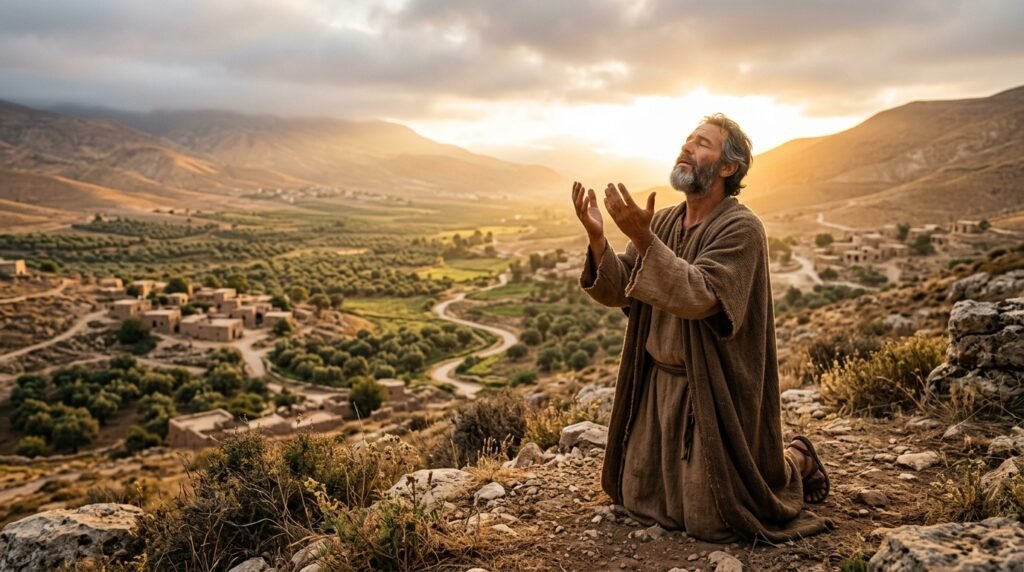
Buried inside one of the longest genealogies in the Old Testament, a single, unexpected verse breaks the pattern. Chapter after chapter of names in 1 Chronicles rolls by, father begetting son, tribe after tribe of Judah, until suddenly the text pauses on a man named Jabez, and for two brief verses, tells us not who he was descended from, but who he actually was. The Prayer of Jabez is short, only a few lines, yet it has become one of the most discussed and debated prayers in modern Christian life, thanks largely to a small book that turned it into a publishing phenomenon at the turn of the millennium.
This guide brings together everything worth knowing about this prayer: its exact biblical text in the King James Version, how other major translations render it, the meaning behind Jabez's name and each line of his request, the story of Bruce Wilkinson's bestselling book and the debate it sparked, and practical guidance for anyone who wants to pray it thoughtfully today rather than treat it as a formula. Whether you found this page through curiosity about a single Bible verse or through the book that made this prayer famous, everything here is presented with care for both the Scripture itself and the honest questions people bring to it.
In Short
The Prayer of Jabez is a four-part request found in 1 Chronicles 4:9-10, asking God for blessing, enlarged territory, His guiding hand, and protection from evil. It became widely known through Bruce Wilkinson's 1999 book of the same name, which read the ancient prayer as a pattern for personal breakthrough and blessing.
-
Who Was Jabez in the Bible?
- The Prayer of Jabez in Scripture: Full Text (KJV)
- How Other Translations Render the Prayer of Jabez
- The Meaning Behind Each Line of the Prayer of Jabez
- The Prayer of Jabez Book: Bruce Wilkinson's Bestseller
- The Theological Debate: Is the Prayer of Jabez About Prosperity?
- How to Pray the Prayer of Jabez Today
- Recommended video
- Frequently Asked Questions About the Prayer of Jabez (FAQ)
Who Was Jabez in the Bible?
Jabez appears in exactly two verses of Scripture, tucked into the genealogical record of the tribe of Judah in 1 Chronicles 4. Everything else in that chapter reads as a list, name after name connected by "begat" or "sons of," the kind of passage many readers skim past on their way to more familiar territory. Then, without warning, the text stops listing and starts telling: "And Jabez was more honourable than his brethren."
We are told almost nothing about his life beyond this. We do not know his father's name with certainty, what tribe leadership he held, or what became of his descendants. What the text gives us instead is a name, a mother's pain, and a prayer. His mother named him Jabez, explicitly explaining why: "because I bare him with sorrow." In Hebrew, this is a deliberate wordplay, since Jabez closely echoes the Hebrew word for pain or sorrow, meaning that every time anyone spoke this man's name aloud, they were, in effect, calling him "Pain."
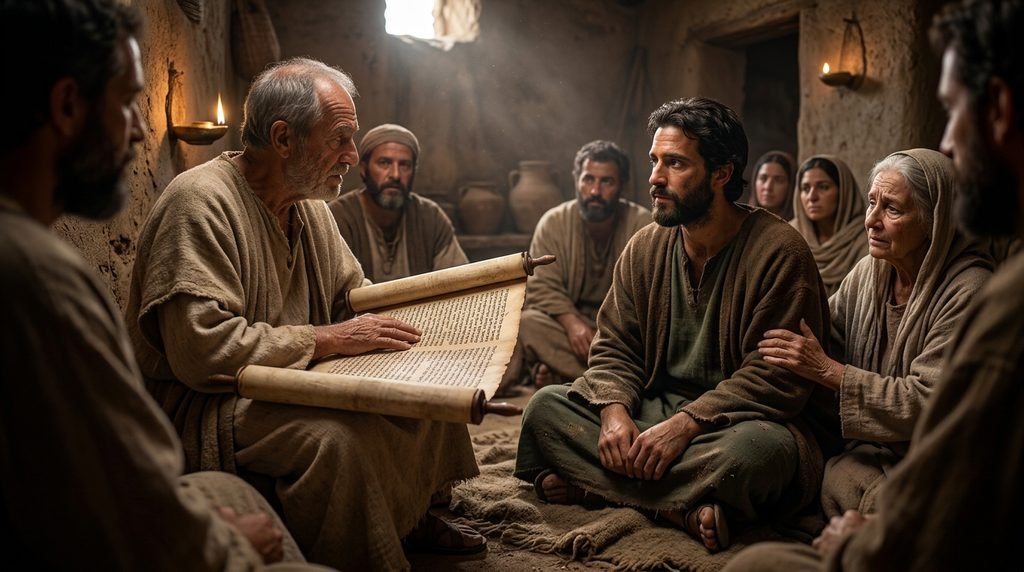
The Prayer of Jabez in Scripture: Full Text (KJV)
Here is the complete passage exactly as it appears in the King James Version, the full context surrounding the prayer itself.
1 Chronicles 4:9-10 (King James Version)
And Jabez was more honourable than his brethren: and his mother called his name Jabez, saying, Because I bare him with sorrow. And Jabez called on the God of Israel, saying, Oh that thou wouldest bless me indeed, and enlarge my coast, and that thine hand might be with me, and that thou wouldest keep me from evil, that it may not grieve me! And God granted him that which he requested.
This is the entire prayer, four requests wrapped inside two verses, followed immediately by five words that give the whole passage its lasting power: "And God granted him that which he requested."
How Other Translations Render the Prayer of Jabez
Because different Bible translations use different English wording, many readers search specifically for how their preferred version phrases this passage. The table below compares how three widely used translations approach the same four requests, without reproducing their copyrighted wording at length.
| Translation | Style |
|---|---|
| KJV (1611) | Formal, older English, "Oh that thou wouldest," full public domain text given above |
| NIV (New International Version) | Conversational and direct, phrasing the request as a heartfelt cry, "keep me from harm" rather than "keep me from evil" |
| NKJV (New King James Version) | Retains the King James structure and vocabulary closely, but modernizes the pronouns and verb forms |
All three translations, along with virtually every other major English Bible, agree on the substance of the four requests; the differences are almost entirely stylistic, a matter of older versus more contemporary English rather than any disagreement about what Jabez actually asked for.

The Meaning Behind Each Line of the Prayer of Jabez
Reading the prayer slowly, phrase by phrase, reveals a structure that many casual readers miss on a first pass: four distinct requests, each addressing a different dimension of a life lived in dependence on God.
| Request | What It Asks For |
|---|---|
| "Bless me indeed" | A request for real, substantial blessing, not a passing or partial one |
| "Enlarge my coast" | A request for expanded territory, influence, or opportunity to serve God's purposes |
| "Thine hand might be with me" | A request for God's continued presence and guidance, not simply an initial gift |
| "Keep me from evil" | A request for protection from harm and from moral failure alike |
The second request, to "enlarge my coast," draws directly on Israel's specific historical context: the tribes of Israel had been given fixed territorial borders, and to ask for enlarged borders was to ask for more land, more resources, and more room to live out one's calling among God's people. Read this way, the request was never primarily about personal wealth; it was about having a larger sphere in which to serve and to be useful.
The third request is easy to skip past, yet it may be the hinge on which the entire prayer turns. Jabez does not simply ask for blessing and territory and then walk away to enjoy them alone; he asks that God's hand remain with him throughout, an acknowledgment that whatever he received, he wanted to receive it in ongoing relationship with God rather than as a one-time transaction. The final request, to be kept from evil "that it may not grieve me," closes the prayer by returning to the pain embedded in his own name, asking that his life not be marked by the same sorrow that shaped his birth.

The Prayer of Jabez Book: Bruce Wilkinson's Bestseller
For most of Christian history, this two-verse prayer remained a relatively obscure passage, known mainly to careful readers of the Old Testament genealogies. That changed dramatically in 2000, when Bruce Wilkinson, an American Bible teacher, published a short book titled The Prayer of Jabez: Breaking Through to the Blessed Life, built entirely around this single passage. The book became one of the best-selling religious books of the following decade, selling millions of copies and spending well over a year on major bestseller lists.
Wilkinson's central argument was that the prayer offered a simple, repeatable pattern believers could use daily to ask God for enlarged influence, opportunity, and impact in their own lives, drawing a direct line from Jabez's ancient request for territory to a modern reader's hope for a larger, more meaningful life. The book's brevity and its promise of a concrete, memorable prayer formula were widely credited with its extraordinary popularity, especially among readers looking for a practical entry point into a more intentional prayer life.
| Detail | Fact |
|---|---|
| Author | Bruce Wilkinson |
| Published | 2000 |
| Central Idea | The prayer as a daily, repeatable pattern for asking God for enlarged influence and blessing |
| Reception | Massive commercial success alongside significant theological criticism |

The Theological Debate: Is the Prayer of Jabez About Prosperity?
Fairness to readers requires being direct about this: Wilkinson's book, and the way this prayer entered popular Christian culture, drew substantial criticism from a range of pastors, theologians, and biblical scholars. The central concern was not with the biblical text itself, but with how it was applied. Critics argued that presenting the prayer as a formula for personal expansion risked aligning it too closely with what is often called the prosperity gospel, the idea that faithful prayer reliably produces material blessing and worldly success, a teaching many mainstream Christian traditions, including Catholic teaching, treat with considerable caution.
Defenders of the book countered that Wilkinson never claimed the prayer guaranteed wealth in the way prosperity teaching typically implies, and that his emphasis fell more on spiritual influence and Kingdom impact than on material gain specifically. Even so, the broader debate raised a genuinely useful question for anyone approaching this prayer today: whether a request drawn from one man's specific, ancient circumstances should be treated as a universal formula, or understood instead as a single example of honest, wholehearted prayer, worth learning from rather than mechanically repeating.
A Balanced Reading
The safest way to approach the Prayer of Jabez is as a model of honest, specific, wholehearted prayer, not as a spiritual transaction that guarantees a particular outcome. Scripture itself simply notes that God granted Jabez what he asked; it does not present this as a promise extended to every reader who repeats his words.

How to Pray the Prayer of Jabez Today
For those who want to pray this passage thoughtfully rather than recite it as a formula, it helps to slow down and let each request become personal and specific, rather than treating the ancient wording as a fixed script.
- Read the two verses slowly, ideally aloud, before praying anything else.
- Pause after "bless me indeed" and consider what genuine blessing, not simply comfort, would look like in your own life right now.
- When you reach "enlarge my coast," think concretely about where you feel called to greater influence, responsibility, or service, rather than a vague wish for more.
- Let "thine hand be with me" become a request for ongoing companionship with God, not just help in this one moment.
- Close with "keep me from evil" as an honest acknowledgment of your own specific vulnerabilities, named rather than left general.
A Personal Adaptation of the Prayer of Jabez
Lord, bless me indeed, not with comfort alone, but with a life that truly matters. Enlarge the space I have to serve You, whatever shape that takes in my particular circumstances. Let Your hand remain with me, not only at the start of this, but through every step that follows. And keep me from the evil that would undo what You have given, both the evil around me and the evil I carry within myself. Amen.

Recommended video
Frequently Asked Questions About the Prayer of Jabez (FAQ)
Below, we answer common questions about this prayer, its biblical context, and the debate surrounding its popular use.
1. Where is the Prayer of Jabez found in the Bible?
The Prayer of Jabez is found in 1 Chronicles 4:9-10, within a genealogical section of the Old Testament describing the tribe of Judah. It is one of the shortest complete prayers recorded anywhere in Scripture.
2. What does the name Jabez mean?
The name Jabez is closely connected in Hebrew to the word for pain or sorrow. Scripture explicitly states that his mother named him this "because I bare him with sorrow," meaning his name itself was a permanent reminder of a difficult birth.
3. What are the four requests in the Prayer of Jabez?
Jabez asks God for four things: to be blessed "indeed," to have his territory enlarged, for God's hand to remain with him, and to be kept from evil so that it would not cause him grief. Each request builds on the one before it.
4. Who wrote the popular book about the Prayer of Jabez?
Bruce Wilkinson wrote *The Prayer of Jabez: Breaking Through to the Blessed Life*, published in 2000. The short book became one of the best-selling religious titles of its decade, introducing this obscure Old Testament passage to millions of readers.
5. Why was the Prayer of Jabez book controversial?
Critics argued that presenting the prayer as a repeatable formula for blessing risked resembling prosperity gospel teaching, the idea that faithful prayer reliably produces material success. Supporters countered that the book emphasized spiritual influence and service rather than wealth specifically.
6. What does "enlarge my coast" mean in the Prayer of Jabez?
This phrase refers to Israel's tribal land borders, meaning Jabez was asking for expanded territory, resources, and opportunity. Many readers today understand it more broadly as a request for greater influence or a larger sphere in which to serve.
7. Did God actually answer the Prayer of Jabez?
Yes. The passage closes with a direct statement: "And God granted him that which he requested." Scripture offers no further detail about what this granted blessing looked like in practice, only that the request was fulfilled.
8. Is the Prayer of Jabez appropriate for Catholics to pray?
Yes, since it is genuine Scripture found in the Old Testament book of 1 Chronicles, part of the Bible shared across Christian traditions. Catholics are simply encouraged to pray it as an example of honest, wholehearted petition rather than as a guaranteed formula for material blessing.
9. How is the prayer worded differently in the NIV compared to the KJV?
The NIV uses more conversational modern English, such as "keep me from harm," while the KJV retains older phrasing like "keep me from evil." The substance of all four requests remains consistent across virtually every major English translation.
10. Can I pray the Prayer of Jabez every day?
Yes, many people do pray it daily, though it helps to pray it thoughtfully rather than as routine repetition. Slowing down to let each of the four requests become personal and specific tends to keep the prayer meaningful, rather than reducing it to a fixed script recited without reflection.
Si quieres conocer otros artículos parecidos a The Prayer of Jabez: Full Scripture, Meaning & How to Pray It Today puedes visitar la categoría Prayers.