
Prayer to Archangel Metatron: Meaning, Origins & Invocations for protection, clarity & guidance

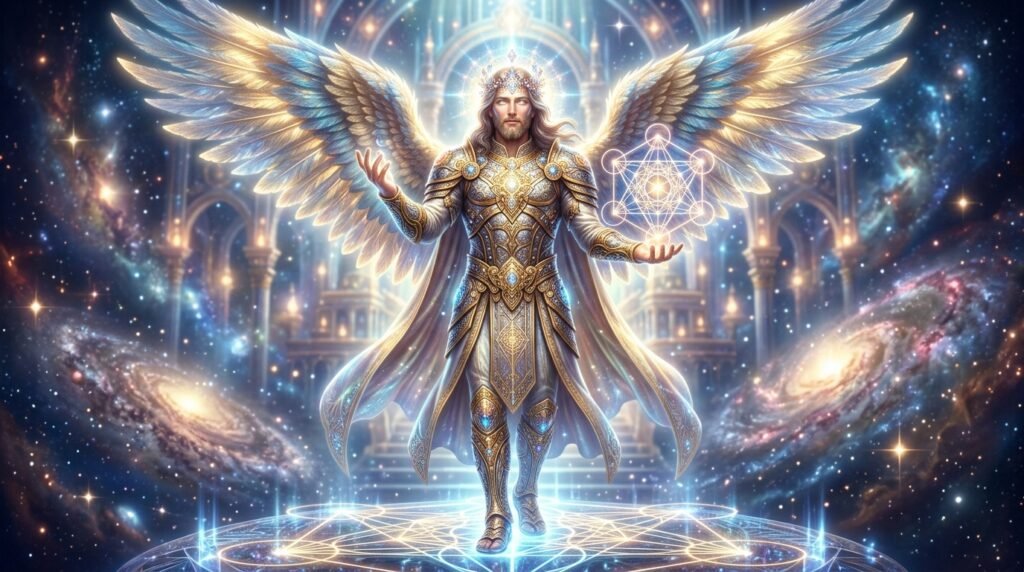
Among all the angelic names that circulate in spiritual literature today, few carry as much mystery, or as much confusion, as Metatron. Unlike Michael, Gabriel, and Raphael, who appear directly in Scripture and hold a clear place in Christian tradition, Metatron comes from an entirely different source: the mystical writings of Judaism, particularly a text known as 3 Enoch. Understanding a prayer to Archangel Metatron means first understanding where this figure actually comes from, since that origin shapes everything about how, and whether, this invocation fits into different spiritual traditions.
This guide explains who Metatron is according to the texts that describe him, why he holds no official place in Catholic doctrine, what the various invocations and prayers associated with him actually look like, and how people today approach this devotion for protection, clarity, and guidance. Whether you found this page out of curiosity about a name you encountered elsewhere, or you are already familiar with this figure through meditation or study, everything here is presented honestly, without dressing up a modern spiritual practice as something it is not.
In Short
Metatron is a figure from Jewish mystical literature, particularly the text known as 3 Enoch, described as a transformed human scribe standing near the throne of God. He does not appear in the Bible and is not recognized as an archangel by the Catholic Church, which names only Michael, Gabriel, and Raphael.
-
Who Is Metatron? Origins in Jewish Mysticism
- Metatron and the Catholic Church
- The Meaning Behind Metatron in Mystical Tradition
- An Archangel Metatron Invocation for Protection
- A Metatron Prayer of Protection for the Home
- Metatron Prayer for Clarity and Guidance
- How People Use These Invocations Today
- Metatron Compared to the Three Recognized Archangels
- Recommended video
- Frequently Asked Questions About Prayer to Archangel Metatron (FAQ)
Who Is Metatron? Origins in Jewish Mysticism
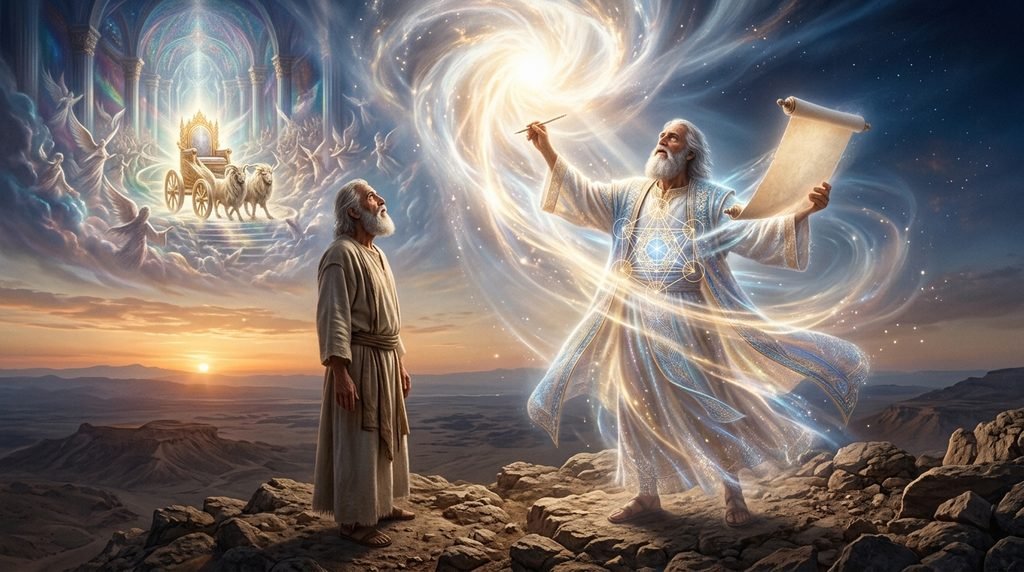
Metatron's story begins not in the Bible, but in a body of Jewish mystical writing known as Merkabah literature, texts concerned with visions of God's heavenly throne and chariot. The most detailed source is 3 Enoch, also called the Sefer Hekhalot, or Book of Palaces, a text likely composed sometime between the fifth and sixth centuries, though drawing on older oral traditions.
According to this account, Metatron was once a man: Enoch, the biblical patriarch described in the Book of Genesis as someone who "walked with God" and was taken up without dying. In 3 Enoch, this same Enoch is transformed into a celestial being, enlarged in stature, clothed in glory, and given the title "Prince of the Presence," standing nearer to the throne of God than any other heavenly being. He is often described as the heavenly scribe, recording the deeds of humanity, and is sometimes called by the striking title "the lesser YHWH," a name that later rabbinic authorities viewed with considerable caution, precisely because it risked blurring the line between a created being and God Himself.
It is worth being clear about what this means: Metatron is not an angel described anywhere in the Old or New Testament. He belongs entirely to a later body of Jewish mystical and esoteric writing, not to the canon of Scripture shared by Jews and Christians alike.
| Element | Detail |
|---|---|
| Primary Source | 3 Enoch (Sefer Hekhalot), Jewish Merkabah mystical literature |
| Identity | The patriarch Enoch, transformed into a celestial being |
| Title | "Prince of the Presence," heavenly scribe |
| Biblical Status | Does not appear in the Old or New Testament |
Metatron and the Catholic Church
Because so much online content presents Metatron alongside Michael, Gabriel, and Raphael as though he belongs to the same tradition, it is worth stating this plainly: the Catholic Church does not recognize Metatron as an archangel, and no prayer to him has ever formed part of Catholic liturgy or approved devotion.
The Church's position on naming angels is not a modern reaction to internet content, either. As early as the year 745, the Council of Rome addressed the practice of invoking angels by names not found in Scripture, explicitly rejecting several such names circulating at the time. Only Michael, Gabriel, and Raphael, the three angels named directly in the Bible, hold a recognized place in Catholic devotion, complete with a shared feast day on September 29 and centuries of approved prayers, novenas, and liturgical use.
This does not make Metatron a fabricated name invented for internet content; his origin in Jewish mystical literature is well-documented and genuinely ancient. It simply means that presenting devotion to him as a form of Catholic prayer would misrepresent both traditions. Catholics seeking angelic intercession within their own faith are better served by the well-established prayers to Michael, Gabriel, and Raphael, which carry the weight of Scripture and centuries of Church teaching behind them.
The Meaning Behind Metatron in Mystical Tradition
Within Jewish mysticism and the later Kabbalistic tradition that expanded on these ideas, Metatron is associated with several recurring themes that shape how he is invoked in contemporary spiritual practice, whether in Jewish mystical circles or in the broader, often eclectic world of modern spirituality.
| Theme | What Tradition Says |
|---|---|
| The Heavenly Scribe | Said to record human deeds and heavenly decrees |
| Guide of the Righteous | Associated in some texts with guiding souls and imparting wisdom |
| Nearness to the Throne | Described as standing closer to God's presence than any other being |
| Bridge Between Human and Divine | His origin as a transformed human is central to his symbolism |
It is this last theme, a human being transformed and drawn close to the divine, that many people find most compelling about Metatron today, regardless of their particular spiritual background. He represents, in the tradition that describes him, the possibility that ordinary faithfulness can lead somewhere extraordinary.
An Archangel Metatron Invocation for Protection
Because Metatron holds no official liturgical prayers within any organized religious tradition open to the public, the invocation below is offered as a contemporary devotional composition, written in the spirit of the themes associated with him, rather than as an ancient or officially sanctioned text.
A contemporary devotional invocation, not an ancient or liturgical text.
Metatron, keeper of the record, near to the throne of the Most High, I ask for your protection over this day. Stand between me and every harm I cannot see, and steady me against every harm I can. Let clarity guard my steps where confusion would otherwise lead me astray, and let whatever record is kept of this day reflect a life lived with honesty and care. I offer this request in humility, trusting in the mercy of God above every intermediary. Amen.
A Metatron Prayer of Protection for the Home
This invocation follows the same devotional spirit, adapted for the protection of a household rather than an individual.
A contemporary devotional invocation, not an ancient or liturgical text.
Metatron, near to the presence of God, extend your watchfulness over this home tonight. Let discord find no entrance here, and let every person who rests under this roof rest in genuine peace. Guard our doorway as you are said to guard the gates of the heavenly halls, and let this household be a place where honesty, patience, and care are recorded more often than not. Amen.

Metatron Prayer for Clarity and Guidance
Because of his association in mystical literature with recorded wisdom and closeness to divine knowledge, many people who approach this devotion do so specifically when seeking clarity in a confusing situation.
A contemporary devotional invocation, not an ancient or liturgical text.
Metatron, scribe of what is true, I bring before you a question I cannot yet answer for myself. Quiet the noise around this decision, and let whatever wisdom is available to me rise to the surface where I can recognize it. I do not ask for certainty, only for enough clarity to take the next honest step. Amen.

How People Use These Invocations Today
Outside of specifically Jewish mystical and Kabbalistic study, devotion to Metatron today is found almost entirely within contemporary, often eclectic spiritual practices sometimes grouped under the broad label of New Age spirituality. In these contexts, Metatron is frequently invoked during meditation, associated with specific symbols such as the Metatron's Cube geometric figure, and paired with practices like journaling, candle work, or crystal meditation, particularly with stones believed to correspond to clarity and protection.
| Context | How Metatron Is Approached |
|---|---|
| Jewish Mysticism | Studied within the Merkabah and later Kabbalistic textual tradition |
| Contemporary Spirituality | Invoked in meditation, often paired with symbolic geometry and crystal work |
| Catholic and Mainstream Christian Practice | Not recognized or included in any approved devotion |
For anyone exploring this figure out of genuine spiritual interest, it is worth approaching the material with the same discernment applied to any devotional practice: understanding its actual source, being honest about what is ancient tradition versus modern composition, and being clear about which religious framework, if any, it belongs to.

Metatron Compared to the Three Recognized Archangels
For readers coming to this topic from a Catholic or Christian background, this comparison may help clarify exactly where Metatron stands relative to the angels named in Scripture.
| Figure | Named in Scripture | Recognized by the Catholic Church |
|---|---|---|
| Michael | Yes (Daniel, Jude, Revelation) | Yes, with a feast day and approved prayers |
| Gabriel | Yes (Daniel, Luke) | Yes, with a feast day and approved prayers |
| Raphael | Yes (Tobit) | Yes, with a feast day and approved prayers |
| Metatron | No | No |
Recommended video
Frequently Asked Questions About Prayer to Archangel Metatron (FAQ)
Below, we answer common questions about who Metatron is, where this figure comes from, and how the invocations associated with him are understood today.
1. Is Metatron mentioned in the Bible?
No. Metatron does not appear anywhere in the Old or New Testament. He comes from later Jewish mystical literature, primarily a text called 3 Enoch, which describes him as the patriarch Enoch transformed into a celestial being.
2. Is it appropriate for Catholics to pray to Metatron?
The Catholic Church does not recognize Metatron as an archangel, and no prayer to him forms part of Catholic teaching or approved devotion. Catholics seeking angelic intercession are better served by the prayers to Michael, Gabriel, and Raphael, the only three angels named in Scripture and recognized by the Church.
3. Where does the name Metatron come from?
The exact origin of the name is debated among scholars, with theories linking it to Greek or Latin roots meaning something close to "one who serves behind" or "one who occupies a throne next to another." No single explanation is universally agreed upon, even within the Jewish mystical tradition that first describes him.
4. Was Metatron ever a human being?
According to 3 Enoch, yes. Metatron is identified as the biblical patriarch Enoch, described in Genesis as someone who "walked with God" and was taken up without dying, later transformed into a celestial being and given the title "Prince of the Presence."
5. Are the prayers to Metatron ancient or modern?
Unlike the prayers to Michael, Gabriel, and Raphael, which have centuries of documented liturgical use, no ancient or officially sanctioned prayer to Metatron exists for public devotional use. Invocations found today, including the ones in this guide, are contemporary compositions written in the spirit of the themes associated with him.
6. What is Metatron's Cube, and is it related to these prayers?
Metatron's Cube is a geometric figure popular in contemporary spiritual and New Age circles, said to contain all the geometric shapes found in creation. While often displayed alongside invocations to Metatron, the symbol itself has no documented connection to the original Jewish mystical texts that describe him.
7. Why did Jewish authorities view the title "the lesser YHWH" with caution?
Some passages in mystical literature refer to Metatron by this striking title, and later rabbinic authorities grew concerned that it risked blurring the line between a created being and God Himself. This caution shaped how later Jewish tradition approached and limited devotion to Metatron.
8. What is the difference between an angel and an archangel?
In Christian tradition, an archangel refers to one of a small number of angels holding a particularly significant rank or mission, such as Michael, Gabriel, and Raphael. Metatron is never called an archangel within his original Jewish mystical sources; that specific title is a later addition found mainly in contemporary spiritual writing.
9. Who typically practices devotion to Metatron today?
Outside of scholarly study within Jewish mysticism and Kabbalah, devotion to Metatron today is found almost entirely within contemporary, eclectic spiritual practices sometimes grouped under the label of New Age spirituality, often paired with meditation, journaling, or crystal work.
10. If I want angelic protection within a Christian framework, who should I pray to instead?
Within Christian and specifically Catholic tradition, Michael, Gabriel, and Raphael are the three angels named in Scripture and recognized by the Church, each with centuries of approved prayers, a shared feast day, and a well-documented role in the Bible. These offer a well-established alternative for anyone seeking angelic intercession within a Christian framework.
Si quieres conocer otros artículos parecidos a Prayer to Archangel Metatron: Meaning, Origins & Invocations for protection, clarity & guidance puedes visitar la categoría Archangels.