
Ave Maria Prayer: The Complete Catholic Guide to History, Meaning, Scripture, and Translations
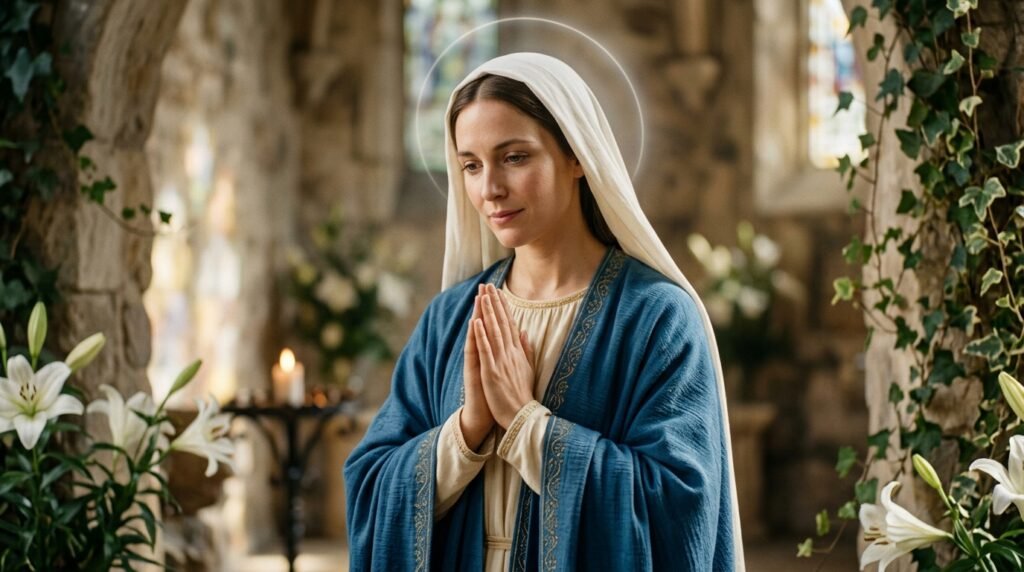
The Hail Mary prayer—known in Latin as the Ave Maria—is one of the most cherished and widely recited devotions in Western Christianity. Revered by millions of Catholics, Anglicans, and Orthodox believers across the globe, this sacred invocation serves as an angelic greeting, a scriptural proclamation of Christ's Incarnation, and a humble plea for the Blessed Virgin Mary's maternal intercession.
Whether prayed during the Holy Rosary, recited three times daily during the Angelus, or offered in moments of quiet personal distress, the Hail Mary connects the believer directly to the central mystery of the Christian faith: God becoming man in the pure womb of Mary.
- Biblical Origins of the Hail Mary Prayer in Sacred Scripture
- The Complete Text of the Hail Mary Prayer in English
- Historical Evolution: How the Hail Mary Formed Over Time
- Line-by-Line Meaning and Theological Breakdown
- Multilingual Translations: Latin and Spanish
- The Role of the Hail Mary in Popular Marian Devotions
- Recommended video
- Frequently Asked Questions About the Hail Mary Prayer (FAQ)
Biblical Origins of the Hail Mary Prayer in Sacred Scripture
Where does the Hail Mary originate? Unlike prayers composed entirely by later theologians, the first half of the Hail Mary is drawn almost verbatim from the Gospel of Saint Luke. It synthesizes two distinct divine encounters recorded in early New Testament narrative.
Scriptural Foundations in the Gospel of Luke
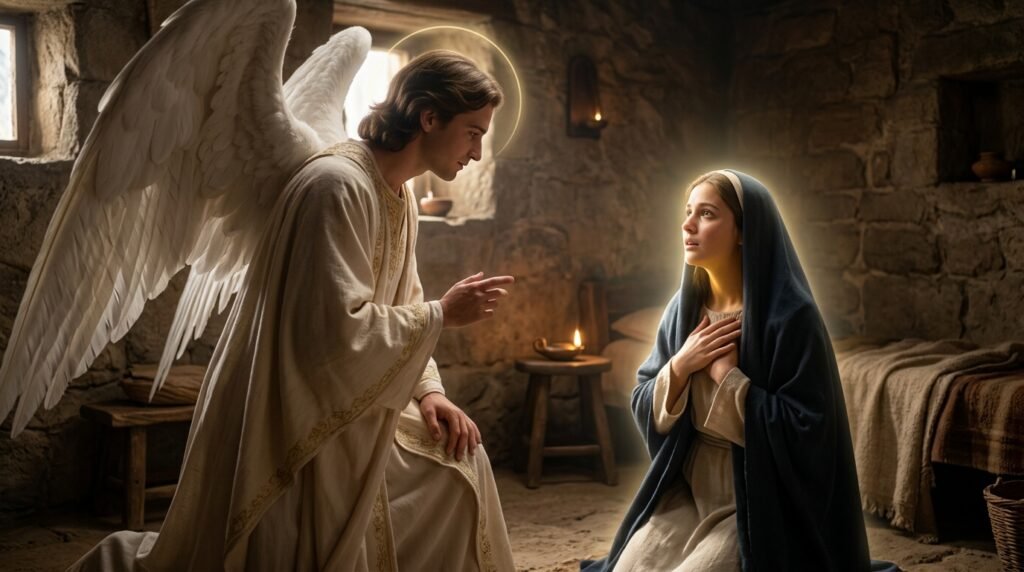
The Annunciation (Luke 1:28): The Archangel Gabriel greets Mary in Nazareth: "Hail, full of grace, the Lord is with thee."
The Visitation (Luke 1:42): Filled with the Holy Spirit, Saint Elizabeth exclaims: "Blessed art thou among women, and blessed is the fruit of thy womb!"
The Holy Name of Jesus: Added by the Church to ground the angelic greeting firmly in the person of Christ.
By joining Gabriel's heavenly greeting with Elizabeth's Spirit-inspired praise, the Church forms a continuous song of adoration toward God for choosing a humble maiden to bring the Savior into the world.
The Complete Text of the Hail Mary Prayer in English
Below is the complete, official English text of the Hail Mary as prayed across Catholic parishes, schools, and homes worldwide.
Traditional English Version (Catholic Liturgical Text)
Hail Mary, full of grace, the Lord is with thee. Blessed art thou among women, and blessed is the fruit of thy womb, Jesus.
Holy Mary, Mother of God, pray for us sinners, now and at the hour of our death. Amen.
Historical Evolution: How the Hail Mary Formed Over Time
The Hail Mary did not appear overnight in its current form. It developed gradually over more than a millennium of Christian liturgical practice.
| Historical Period | Developmental Milestone | Textual Addition |
|---|---|---|
| 5th–10th Century | Liturgical antiphons in monastic offices | Joining of Luke 1:28 and Luke 1:42 into a single devotional chant |
| 13th Century | Addition of the Holy Name of Jesus | Pope Urban IV officially inserted the name "Jesus" at the end of the scriptural verses |
| 15th Century | Petitionary conclusion introduced | Franciscan prayer books added: "Holy Mary, Mother of God, pray for us sinners..." |
| 1568 (Pius V) | Official Roman Breviary promulgation | Pope Saint Pius V standardized the full prayer for the entire Western Catholic Church |
Line-by-Line Meaning and Theological Breakdown
Every word of the Hail Mary carries profound theological weight, affirming key Christian doctrines regarding Christ, Mary, grace, and eternal salvation.
1. "Hail Mary, full of grace" (Kacharitomene)
The original Greek word used by Archangel Gabriel in Luke 1:28 is Kecharitomene. This unique grammatical form signifies one who has been completely transformed and filled with divine grace in a permanent, abiding state. In Catholic theology, this underpins the dogma of the Immaculate Conception—that Mary was preserved free from original sin from the first moment of her existence.
2. "The Lord is with thee"
Echoing Old Testament commissionings of figures like Moses, Gideon, and Jeremiah, this phrase indicates that God has chosen Mary for an extraordinary, monumental mission in salvation history.
3. "Blessed art thou among women"
Elizabeth's exclamation recognizes Mary's unique position above all women in human history, chosen to be the ark of the new covenant.
4. "And blessed is the fruit of thy womb, Jesus"
This clause ensures that all honor shown to Mary leads directly to Christ. Mary is blessed precisely because of Jesus. As the Council of Ephesus (431 AD) declared, Mary is truly Theotokos (God-bearer) because Jesus is true God and true man.
5. "Holy Mary, Mother of God"
Affirms the divine maternity of Mary. Because Jesus Christ is one divine person with two natures (divine and human), Mary is truly the Mother of God made man, not merely the mother of Christ's physical body.
6. "Pray for us sinners, now and at the hour of our death. Amen."
A humble petition asking Mary to intercede for us before her Son. It highlights two critical moments in human life: the present moment (now) and the final earthly transition (at the hour of our death).
Multilingual Translations: Latin and Spanish
Reciting the Hail Mary in Latin or Spanish links believers to global Catholic tradition and ancient liturgical roots.
1. Latin Text (Ave Maria)
Ave Maria, gratia plena, Dominus tecum. Benedicta tu in mulieribus, et benedictus fructus ventris tui, Iesus.
Sancta Maria, Mater Dei, ora pro nobis peccatoribus, nunc et in hora mortis nostrae. Amen.
2. Spanish Text (Dios Te Salve María)
Texto Completo en Español
Dios te salve, María, llena eres de gracia, el Señor es contigo. Bendita tú eres entre todas las mujeres, y bendito es el fruto de tu vientre, Jesús.
Santa María, Madre de Dios, ruega por nosotros, pecadores, ahora y en la hora de nuestra muerte. Amén.
The Role of the Hail Mary in Popular Marian Devotions
The Hail Mary forms the bedrock of numerous traditional Catholic prayer structures.
Key Devotional Practices Centered on the Hail Mary
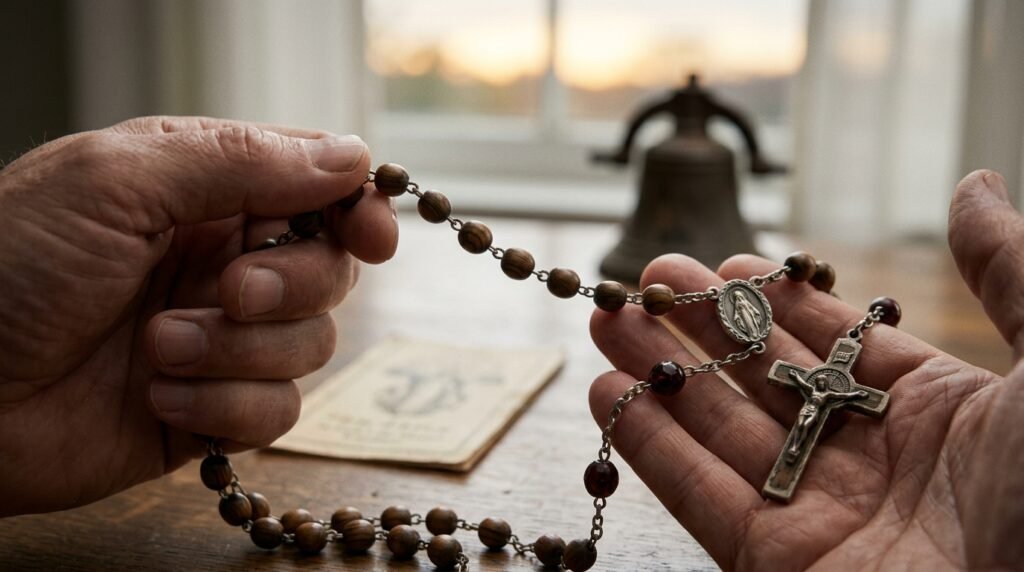
1. The Holy Rosary: The primary component of every decade. Fifty-three Hail Marys are prayed across five decades while meditating on the mysteries of Christ's life.
2. The Angelus: Prayed traditionally three times daily (6 AM, 12 PM, and 6 PM), combining biblical versicles with three Hail Marys to commemorate the Incarnation.
3. The Three Hail Marys Devotion: An ancient practice originating with Saint Anthony of Padua and Saint Mechtilde, offering three Hail Marys daily for purity, wisdom, and a holy death.
4. The Chaplet of Divine Mercy: Uses Hail Mary beads within each decade to offer Christ's Passion to the Father.
Recommended video
Frequently Asked Questions About the Hail Mary Prayer (FAQ)
Below, we answer common questions regarding the biblical roots, theological meaning, and proper practice of the Hail Mary prayer.
1. Is the Hail Mary found directly in the Bible?
The first half of the hail mary prayer in the bible is drawn directly from Sacred Scripture (Luke 1:28 and Luke 1:42). The second half is a petitionary addition developed by the early Church asking for Mary's intercession before God.
2. Do Catholics worship Mary when praying the Hail Mary?
No. Catholic theology draws a sharp distinction between Latria (adoration and worship owed to God alone) and Hyperdulia (highest honor and veneration shown to the Blessed Virgin Mary as Christ's mother). When praying the hail mary prayer catholic faithful ask Mary to pray for us, acknowledging that all grace comes from God alone.
3. What does "full of grace" mean in the Hail Mary?
In hail mary full of grace scripture, the phrase translates the Greek word Kecharitomene, meaning Mary was favored by God and filled with divine grace in an enduring, perfect manner to prepare her to bear the Son of God.
4. What is the Three Hail Marys devotion?
The three hail marys prayer is a traditional daily practice where a believer recites three Hail Marys every morning and evening. It asks Mary for spiritual protection, purity of mind, and the grace of final perseverance at death.
5. Why is Mary called "Mother of God" in the prayer?
In the holy mary mother of god prayer, Mary is called Mother of God because Jesus Christ is one divine person with two natures (divine and human). Because Mary gave birth to Jesus, who is God incarnate, she is rightly called the Mother of God (Theotokos).
6. How are the Our Father and Hail Mary prayed together?
In an our father and hail mary prayer sequence (such as during the Holy Rosary), the Our Father introduces a decade or intent, followed by ten Hail Marys. This pairs direct prayer to God the Father with intercessory prayer through Mary, reflecting the communion of saints.
Si quieres conocer otros artículos parecidos a Ave Maria Prayer: The Complete Catholic Guide to History, Meaning, Scripture, and Translations puedes visitar la categoría Prayers.