
Our Father Prayer: The Complete Guide to The Lord's Prayer, Meaning, History, and Translations
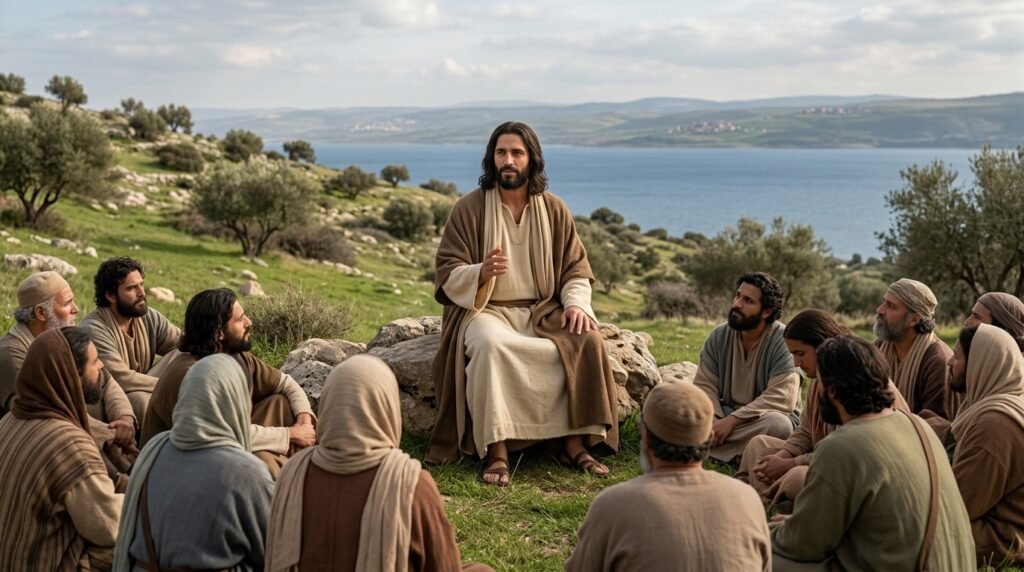
The Our Father prayer—famously recognized throughout Christianity as The Lord's Prayer—stands as the definitive pattern for Christian prayer. Given directly by Jesus Christ to His disciples when they asked Him how to pray, this sacred invocation serves as a spiritual bridge connecting believers across centuries, denominations, and languages.
Whether prayed during the Holy Sacrifice of the Mass, recited at home during daily family devotions, or studied for its rich biblical theology, understanding the full text, line-by-line meaning, and ancient roots of the Lord's Prayer deepens every Christian's personal encounter with God.
- Biblical Origins of The Lord's Prayer in Scripture
- The Complete English Text of the Our Father Prayer
- Line-by-Line Meaning and Theological Breakdown
- Ancient Language Versions: Aramaic, Hebrew, and Latin
- Catholic vs. Protestant Differences: The Doxology Explained
- Traditional Spanish Version (Padre Nuestro)
- Recommended video
- Frequently Asked Questions About The Lord's Prayer (FAQ)
Biblical Origins of The Lord's Prayer in Scripture
Where is The Lord's Prayer in the Bible found? Sacred Scripture records two distinct gospel accounts where Jesus teaches His followers how to approach God in prayer.
Scriptural References in the Gospels
Gospel of Saint Matthew (Matthew 6:9–13): Delivered during the Sermon on the Mount as a model of quiet, sincere devotion free from ostentation.
Gospel of Saint Luke (Luke 11:1–4): Taught after the disciples observed Jesus praying in solitude and pleaded: "Lord, teach us to pray."
Primary Liturgical Text: The standard wording used in Christian worship derives primarily from Saint Matthew's Gospel narrative.
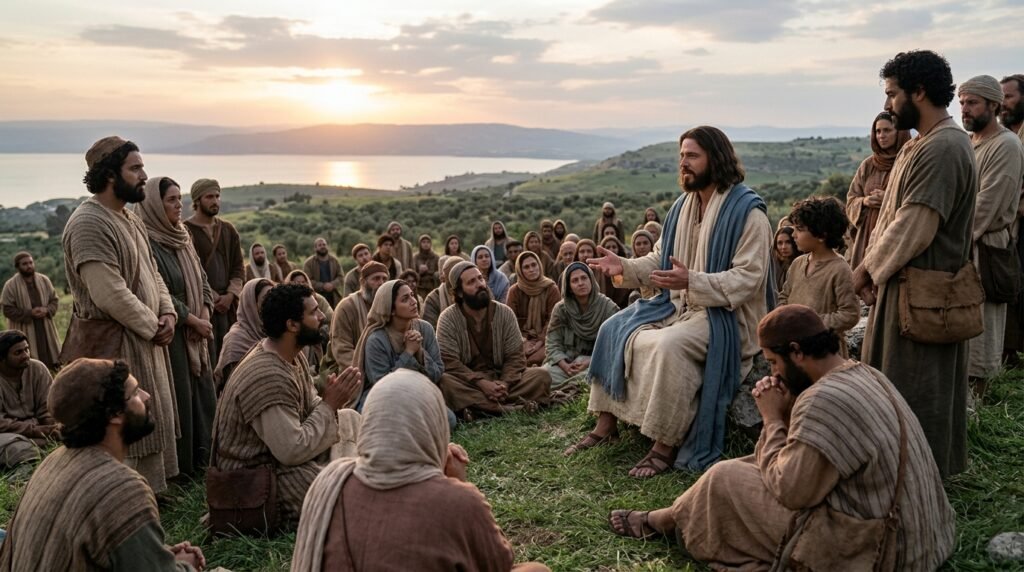
In the Sermon on the Mount (The Lord's Prayer Matthew 6), Jesus contrasts hypocritical public displays with interior filial trust. He gives His followers a concise, perfectly structured prayer containing seven petitions: the first three directed toward God's glory, and the remaining four presenting human spiritual and material needs.
The Complete English Text of the Our Father Prayer
Below are the complete, unabridged traditional and biblical English texts of The Lord's Prayer words as prayed across Catholic, King James, and modern translations.
1. Traditional English Version (Catholic Liturgical Received Text)
Our Father, who art in heaven, hallowed be Thy name; Thy kingdom come; Thy will be done on earth as it is in heaven.
Give us this day our daily bread; and forgive us our trespasses as we forgive those who trespass against us; and lead us not into temptation, but deliver us from evil. Amen.
2. King James Version (The Lord's Prayer KJV – Matthew 6:9–13)
Our Father which art in heaven, Hallowed be thy name. Thy kingdom come. Thy will be done in earth, as it is in heaven.
Give us this day our daily bread. And forgive us our debts, as we forgive our debtors. And lead us not into temptation, but deliver us from evil: For thine is the kingdom, and the power, and the glory, for ever. Amen.
3. New International Version (The Lord's Prayer NIV)
Our Father in heaven, hallowed be Your name, Your kingdom come, Your will be done, on earth as it is in heaven.
Give us today our daily bread. And forgive us our debts, as we also have forgiven our debtors. And lead us not into temptation, but deliver us from the evil one. Amen.
Line-by-Line Meaning and Theological Breakdown
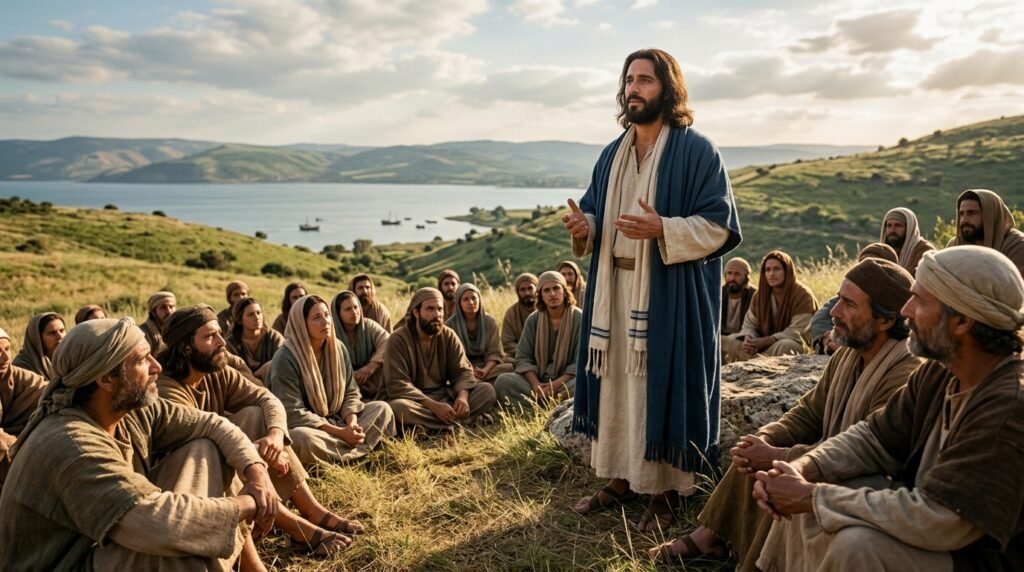
To understand The Lord's Prayer meaning, theologians break down the prayer into its opening invocation followed by seven distinct petitions.
| Phrase / Petition | Focus Area | Theological Significance |
|---|---|---|
| "Our Father who art in heaven" | Invocation | Establishes a loving, childlike relationship with God while acknowledging His transcendent majesty |
| "Hallowed be Thy name" | 1st Petition | Asks that God's name be recognized as holy across the world and honored through our holy lives |
| "Thy kingdom come" | 2nd Petition | Prays for the spread of God's reign of justice and peace on earth, anticipating Christ's Return |
| "Thy will be done on earth as it is in heaven" | 3rd Petition | Surrenders human self-will to align completely with God's salvation plan |
| "Give us this day our daily bread" | 4th Petition | Requests material nourishment for survival and sacramental nourishment (*Epiousios* / Eucharist) |
| "Forgive us our trespasses as we forgive..." | 5th Petition | Links receiving divine mercy directly to our willingness to forgive those who hurt us |
| "Lead us not into temptation" | 6th Petition | Asks God for the grace of vigilance so we do not yield to sinful paths |
| "Deliver us from evil" | 7th Petition | Pleads for spiritual deliverance from the Evil One (Satan) and all physical and spiritual perils |
Ancient Language Versions: Aramaic, Hebrew, and Latin
Exploring the Lord's Prayer in ancient languages unveils the original linguistic world in which Jesus lived and taught His disciples.
1. Original Aramaic Version (Abba)
Jesus spoke Galilean Aramaic in His daily life. When He addressed God as "Father," He used the intimate term Abba, expressing warmth, trust, and familial closeness.
Transliterated Aramaic Text (Peshitta)
Abboon d'bwashmayo, Nethcadash shmokh.
Tethe malkuthokh, Nehwe sevyanokh, aykano d'bwashmayo oph bar'o.
Hab lan lakhmo d'sunqanan yomano.
Washboq lan khaubayn wahtahayn, aykano d'oph khnan shbaqnan l'khayyabayn.
Wela tahlan l'nesyono, ela patzan min bisho. Amen.
2. Hebrew Version (Avinu Shebayashamayim)
In Jewish synagogue prayer and Hebrew scriptural context, the prayer resonates with traditional Hebrew blessings.
Avinu shebayashamayim, yitkadesh shimcha. Tavo malchutcha, yeyaseh retzoncha k持bhashamayim ken ba'aretz. Ten-lanu hayom lechem chukenu. Uselach-lanu al chotenu, kefi shesolchim gam anachnu lachotim lanu. Ve'al tevi'enu lidey nissayon, ki im chaltzenu min hara. Amen.
3. Latin Version (Pater Noster)
For over fifteen centuries, Pater Noster served as the universal prayer uniting the Roman Catholic Church across continents.
Pater noster, qui es in caelis, sanctificetur nomen tuum. Adveniat regnum tuum. Fiat voluntas tua, sicut in caelo et in terra.
Panem nostrum quotidianum da nobis hodie, et dimitte nobis debita nostra, sicut et nos dimittimus debitoribus nostris. Et ne nos inducas in tentationem, sed libera nos a malo. Amen.
Catholic vs. Protestant Differences: The Doxology Explained
One of the most noticeable differences between the Catholic version of the Lord's Prayer and Protestant traditions is the presence of the concluding doxology: "For thine is the kingdom, and the power, and the glory, for ever. Amen."
| Tradition | Liturgical Ending | Historical / Textual Basis |
|---|---|---|
| Roman Catholic | Ends at "...deliver us from evil. Amen." (In Mass, the priest adds an embolism, followed by the congregation proclaiming the doxology separately) | Follows the earliest Greek manuscripts (Codex Sinaiticus & Vaticanus), which do not include the doxology in Matthew's main text |
| Protestant (KJV / Anglican) | Includes "For thine is the kingdom, and the power, and the glory, forever. Amen." attached directly to the prayer | Based on Byzantine manuscript traditions and early liturgical additions like the 1st-century Didache |
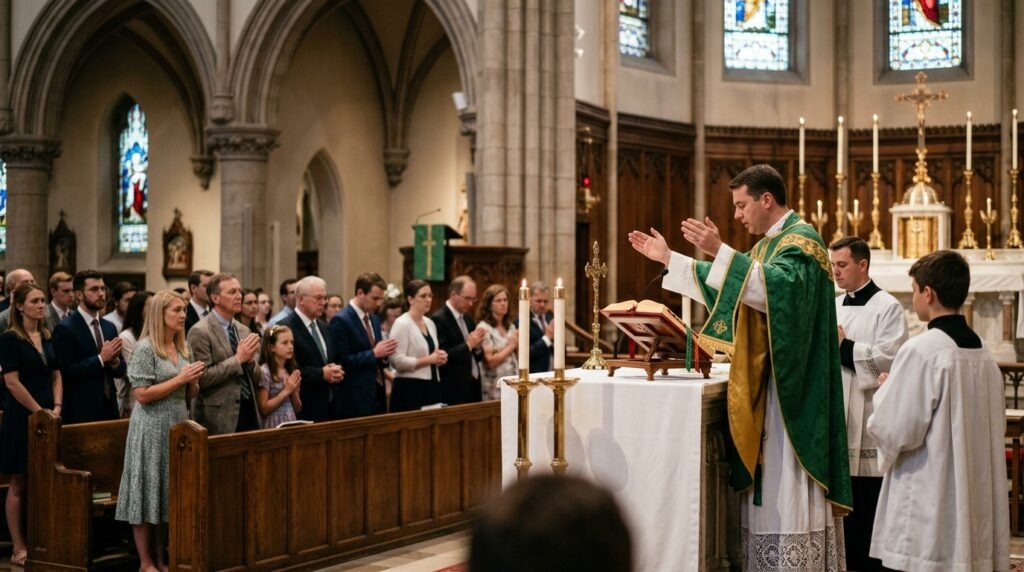
During Roman Catholic Mass, after the congregation prays the Our Father up to "deliver us from evil," the priest prays an extending prayer called the Embolism: "Deliver us, Lord, we pray, from every evil, graciously grant peace in our days..." The congregation then responds with the ancient doxology: "For the kingdom, the power, and the glory are yours, now and forever." Thus, both traditions cherish this praise, though they integrate it differently into liturgical structure.
Traditional Spanish Version (Padre Nuestro)
In Spanish-speaking Catholic communities worldwide, the Padre Nuestro prayer is recited during Mass, daily Rosaries, and family prayer time.
Texto Completo del Padre Nuestro
Padre nuestro, que estás en el cielo, santificado sea tu Nombre; venga a nosotros tu reino; hágase tu voluntad en la tierra como en el cielo.
Danos hoy nuestro pan de cada día; perdona nuestras ofensas, como también nosotros perdonamos a los que nos ofenden; no nos dejes caer en la tentación, y líbranos del mal. Amén.
Recommended video
Frequently Asked Questions About The Lord's Prayer (FAQ)
Below, we answer common questions regarding the Our Father prayer, its biblical translations, line-by-line meaning, and liturgical history.
1. Why is the prayer called "The Lord's Prayer" and "Our Father"?
It is called The Lord's Prayer because Jesus Christ—our Lord—taught it directly to His disciples. It is called the Our Father prayer because those are the opening words (Pater Noster in Latin, Padre Nuestro in Spanish) that Jesus gave us to address God.
2. What does "Hallowed be Thy name" mean in modern English?
The phrase hallowed be thy name means "may Your name be kept holy and held in total reverence." It is a prayer asking that God's holy character be honored across the earth and glorified through the upright actions of believers.
3. Why do some versions use "debts" while others use "trespasses"?
The original Greek word in Matthew 6:12 is opheilemata, which means "debts" or moral obligations owed to God. Luke 11:4 uses hamartias, meaning "sins." When English translations developed, William Tyndale and William Shakespeare-era liturgies adopted the word "trespasses" (meaning moral infractions) for English prayer books, while Bible translations like the KJV kept "debts." Both words express our need for God's forgiveness.
4. Does God lead us into temptation in "lead us not into temptation"?
No. Sacred Scripture explicitly states that God tempts no one (James 1:13). The Greek petition me eisenenkes hemas eis peirasmon means "do not allow us to yield to temptation" or "do not let us succumb when put to the test." It is a petition asking God for the grace and spiritual vigilance necessary to resist sin.
5. What is the meaning of "daily bread" in the prayer?
In Greek, the word used for "daily" is epiousios—a rare word that carries a double meaning. Literally, it refers to the physical sustenance and food needed for each day's survival. Spiritually and sacramentally, early Church Fathers translated it as "super-substantial bread," pointing directly to the spiritual nourishment received in the Holy Eucharist.
6. How is the Our Father prayer used in the Catholic Rosary?
In the Catholic Holy Rosary, the our father prayer catholic text is recited on each of the large beads preceding a decade of Hail Marys. It serves as the spiritual foundation introducing meditation on each of the five mysteries of Christ's life.
Si quieres conocer otros artículos parecidos a Our Father Prayer: The Complete Guide to The Lord's Prayer, Meaning, History, and Translations puedes visitar la categoría Prayers.